.
When a case depends on knowing where a vehicle is at that exact moment, tracking that arrives late or gets overlooked is worse than no tracking at all. That is where real-time covert vehicle tracking proves its worth, giving investigators, security teams, and fleet managers a live view of where a vehicle is and where it has been, while the device itself stays out of sight. Since 2003, we have built GPS tracking for law enforcement, government, private industry, and personal protection, and our vehicle devices are made for this kind of work.
| The Challenge | With TrackingTheWorld |
|---|---|
| Location updates arrive too late to act on. | Compact real-time trackers report a vehicle’s live position on a map. |
| A device that is easy to spot gets found and removed. | Small housings with hardwired, OBD, or battery options support discreet placement. |
| One vehicle, one narrow tracking need. | A full vehicle lineup covering cars, fleets, farm, mining, rental, and more. |
| No record of where a vehicle has been. | Location history and alerts through our GPS tracking software. |
Why Does Covert Vehicle Tracking Matter for Investigations?
The moment a tracker is noticed, its value drops to almost nothing. Keeping a device discreet lets you follow a vehicle’s movements without changing anyone’s behavior, which is the whole point of sensitive work. That is why real-time covert vehicle tracking fits situations where being seen would put the outcome at risk, such as:
- Protecting fleet and company vehicles from theft or misuse
- Recovering a vehicle after it goes missing
- Keeping watch on rental, lease, or high-value vehicles
- Supporting law enforcement, government, and private security operations
Each of these depends on accurate locations you can trust, delivered the moment you need it, not hours after the fact.
How Does Real-Time Vehicle Tracking Actually Work?
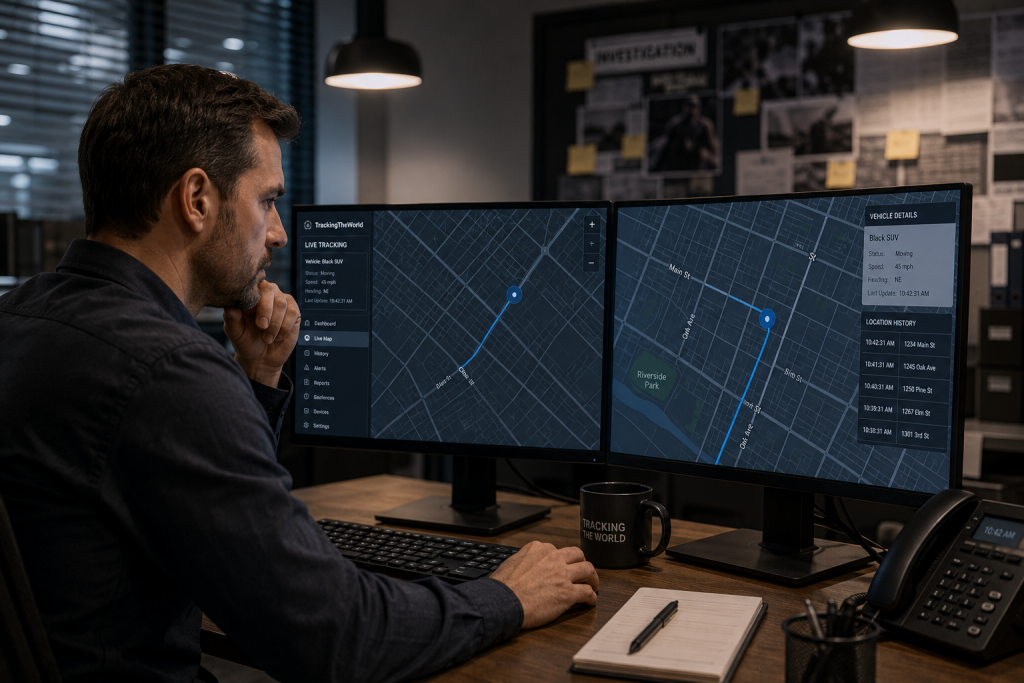
A tracker fixes its position using GPS satellites, then sends that location over a cellular network to our software, where it updates on a live map as the vehicle moves. Instead of reading a report long after the fact, you watch the vehicle in near-real-time and can look back over the exact route it took. Our platform is built to turn raw location data into something you can act on, including:
- Live position on a map that refreshes as the vehicle drives
- Location history so you can retrace where a vehicle has been
- Alerts you can set up around movement and other activity
You can even see a live tracking demo on our site before you commit to a device, so you know what the view looks like in practice.
Which TrackingTheWorld Devices Support Covert Vehicle Tracking?
We build a full range of vehicle trackers, so the right one depends on how you will install it and power it. Getting real-time covert vehicle tracking right starts with matching the hardware to the vehicle and the job. Our vehicle options fall into a few groups:
- OBD trackers such as the WT-OBD and WT-OBD 4G plug straight into the vehicle’s OBD port for a fast install, and the full WT-OBD 4G version can also read diagnostic codes.
- Hardwired trackers such as the AVL-50 4G, AVL-55, and AVL-300 series install inside the vehicle and offer multiple input and output options, with some supporting external GPS antennas, Garmin FMI, sensors, and voice.
- The multi-purpose Enduro Plus 4G covers vehicle use alongside personal and asset tracking, which helps when running wires is not practical.
Across the lineup, models differ by network (4G LTE, 3G, CDMA, or GSM/GPRS), install type, size, and certifications such as FCC and Verizon, so there is room to fit the device to the situation.
What Should You Look for in a Covert Tracking Setup?
Start with the vehicle, the power source, and how you plan to use the location data. The strongest setup pairs a device that installs cleanly and stays hidden with software that shows live location the instant you need it. For any team that leans on real-time covert vehicle tracking, a few questions guide the choice:
- How will your device be powered: hardwired, through the OBD port, or by battery?
- How quickly does it need to go in and come back out?
- Which cellular network has the best coverage where the vehicle travels?
- What do you need from the software: a live map, history, alerts, or all three?
Answer those, and the right device choice usually becomes clear. If you are not sure, our team can help you match a model to the situation.
Frequently Asked Questions
Is covert vehicle tracking legal?
It depends on your state and how your vehicle is used. As a general rule, you need to own the vehicle or have the proper authority to track it, and the rules are stricter for certain uses. Confirm what applies to your situation, and for law enforcement or investigative work, follow the required legal process.
How does a covert tracker stay out of sight?
We feature vehicle trackers that use compact housings. And you can hardwire them, or plug them into your OBD port, or even run them on battery power. This gives you several ways to place a device where it will not be noticed. The right option depends on the vehicle and how long the device needs to stay installed.
Can I track more than one vehicle at once?
Yes. We build our GPS tracking software to monitor multiple devices from one place, which is why it works well for fleets as well as single vehicles. You can view each vehicle’s live location and history in the same platform.
What cellular networks do your vehicle trackers use?
Depending on the model, our devices run on 4G LTE, 3G, CDMA, or GSM/GPRS. Coverage varies by area, so it is worth confirming which network fits your region before you choose, and our team can point you to the right device.
Talk to TrackingTheWorld
Ready to put real-time tracking to work without giving it away? Talk with our team about which vehicle device fits your investigation, fleet, or security needs. Call (650) 692-8100, email sales@trackingtheworld.com, or reach us through our contact page. We are located at 2360 East Bidwell Street, Suite 111, Folsom, CA 95630.
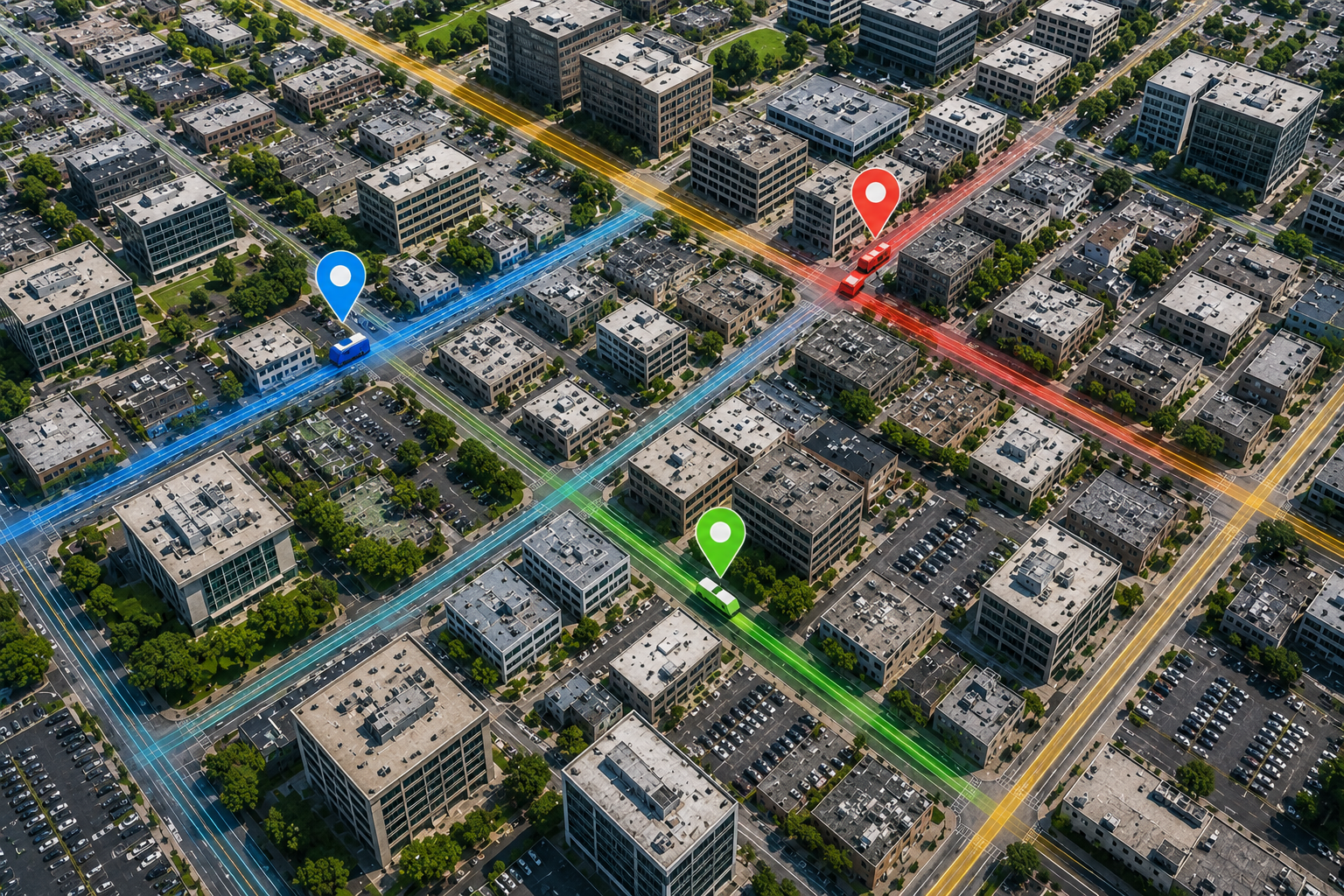

With the way the modern world is in terms of policing and law enforcement, the ability to monitor, manage, and respond to movement and location data is so very important. When law enforcement agencies deploy advanced systems, they are leveraging GPS tracking for law enforcement to enhance surveillance, improve officer safety and bolster operational efficiency.
In this guide, we’ll explore how these tools work, the legal and practical considerations, key technologies in play, and how agencies can deploy them responsibly and effectively.
Why Location Technology Matters
Law enforcement agencies operate in dynamic environments. There are vehicles in motion, suspects on the move, and officers deployed across large jurisdictions. Location tracking tools offer a way to:
- Monitor fleets and ensure officers are in the right place at the right time
- Tag and trace suspect vehicles or persons of interest without high-risk pursuits
- Improve response time by identifying the closest unit or asset
- Build richer intelligence by linking movement patterns with incident data
Utilizing GPS and related technologies amongst agencies helps to gain situational awareness. They can help make data-driven decisions rather than relying entirely on visual or static observation.
How the Technology Works
At the heart of tracking is a setup of devices and systems that receive and transmit data from satellites, cellular networks, or dedicated receivers. Some of the common methods include:
- Vehicle-mounted GPS trackers or transmitters linked to dispatch systems
- “Tag and track” systems, where a small device is affixed to a suspect vehicle and sends live coordinates to a monitoring console
- Fleet-management platforms that combine GPS with geofencing, timestamping, and analytics
- Mobile or body-worn devices for personnel tracking, typically integrated into command-and-control networks
These systems collect real-time or near-real-time location data, feed it into mapping and software platforms, and allow dispatchers or supervisors to monitor movement, set alerts when assets leave predefined zones, or review historical movement trails for investigation purposes.
Key Benefits of GPS Tracking for Law Enforcement
When properly implemented, location-tracking systems deliver a number of tangible advantages:
- Enhanced officer safety: Knowing the exact location of units drives faster backup and better coordination.
- Reduced risk during pursuits: “Tag-and-track” systems allow officers to follow suspect vehicles remotely, reducing dangerous high-speed chases.
- Resource optimization: Command centers can deploy the nearest available unit, reducing response times and improving coverage.
- Improved investigation outcomes: Mapping movement of suspects, vehicles, or assets over time supports evidence gathering and pattern recognition.
- Accountability and transparency: Systems create audit trails for vehicle or officer movement, which supports internal review and external oversight.
These benefits, combined with newer analytics tools, mean that agencies can shift from reactive to proactive modes of operation.
Legal and Ethical Considerations

Photo by Zoe Askew on Unsplash
Even the best technology must be used within legal and ethical frameworks. Proper deployment of GPS tracking in law enforcement must account for privacy, due process, and statutory restrictions. Key points include:
- The landmark case United States v. Jones established that attaching a GPS device to a suspect’s vehicle constitutes a search under the Fourth Amendment, generally requiring a warrant.
- State statutes vary regarding tracking devices. While law enforcement exceptions exist, agencies must stay current with state rules about placement and monitoring.
- Tracking must be justified by probable cause, time-limited, and well documented. Especially when monitoring private individuals.
- Appropriate policies must govern data retention, access controls, and how location information is stored or shared.
- Transparency with communities and oversight mechanisms help maintain trust. Especially in jurisdictions under scrutiny for surveillance practices.
Failure to adhere can lead to evidence suppression, legal challenges, or public backlash.
Practical Deployment: Strategy and Best Practices
Adopting location-tracking tools is not simply a matter of buying hardware and switching it on. Agencies need a well-rounded approach:
- Assess operational needs – Determine whether you are tracking fleets, suspects, foot patrol units, or all of the above. Identify performance goals (e.g., reduced pursuit incidents, faster responses).
- Choose the right technology – Consider device ruggedness, power/cell network coverage, real-time vs. logging mode, integration with CAD systems.
- Define clear policy and governance – Who can install devices? Under what conditions? How long is data retained? Who can access it?
- Train staff thoroughly – Officers, dispatchers, and IT staff all need to understand how to interpret data, respond to alerts, handle device deployment, and safeguard privacy.
- Monitor and analyze outcomes – Track metrics such as reduced pursuit rates, improved response times, successful suspect captures, and cost savings from avoided incidents.
- Audit and refine – Regular reviews ensure compliance, evaluate new tech options, and validate that the system is yielding measurable benefits.
Case Studies and Real-World Examples
For example, one police agency implemented a projectile-launched GPS tag. It affixes to a suspect vehicle and transmits location until the vehicle stops or is contained. This allowed the agency to monitor high-risk suspects without engaging in a chase, significantly reducing officer risk and property damage.
Another agency used fleet GPS tracking to create heat maps of patrol vehicle locations. The result was the ability to identify and fill coverage gaps. This leads to improved response times and fewer idle units.
These examples show that when an agency aligns technology, policy, and operational goals, the benefits can be substantial.
Challenges and Limitations
No system is perfect. Agencies should be aware of common limitations and challenges:
- Signal or coverage issues
- Data overload
- Device tampering or removal
- Budget and lifecycle
- Legal and community relations risk
Agencies must treat the technology as part of an ecosystem, not a silver bullet.
At Tracking the World, we support law enforcement agencies by offering hardware and software solutions designed for mission-critical tracking and surveillance. Whether you need covert vehicle-mounted devices, dispatcher consoles, or full-suite map-based analytics. We can help you deploy tools aligned with your operational goals and policy requirements.
GPS Tracking for Law Enforcement with Tracking the World
Implementing GPS tracking for law enforcement effectively means more than just buying tracking devices. Any approach will require strategy, governance, training, and integration. When done right, these tools can enhance officer safety, improve operational efficiency, and support evidence-based policing. With the power of surveillance comes the responsibility to protect privacy and maintain public trust. Tracking the World is here to help. Check out our options today.


