An LTE-M GPS tracker uses GPS to determine its location and an LTE-M cellular network to send that location to tracking software. It is commonly used for vehicles, equipment, trailers, and other connected assets that need reliable coverage with relatively low power consumption. This guide explains how it works and helps you decide whether it fits your job.
| Common tracking problem | How LTE-M helps |
| Batteries die too soon. | The device sleeps between short reports, so power lasts longer. |
| Old 2G and 3G networks are going away. | LTE-M runs on current 4G networks. |
| Moving assets lose their connection. | The link follows the device from tower to tower. |
| Installation takes too much work. | Many models plug in or mount without wiring. |
How do GPS and LTE-M work together?
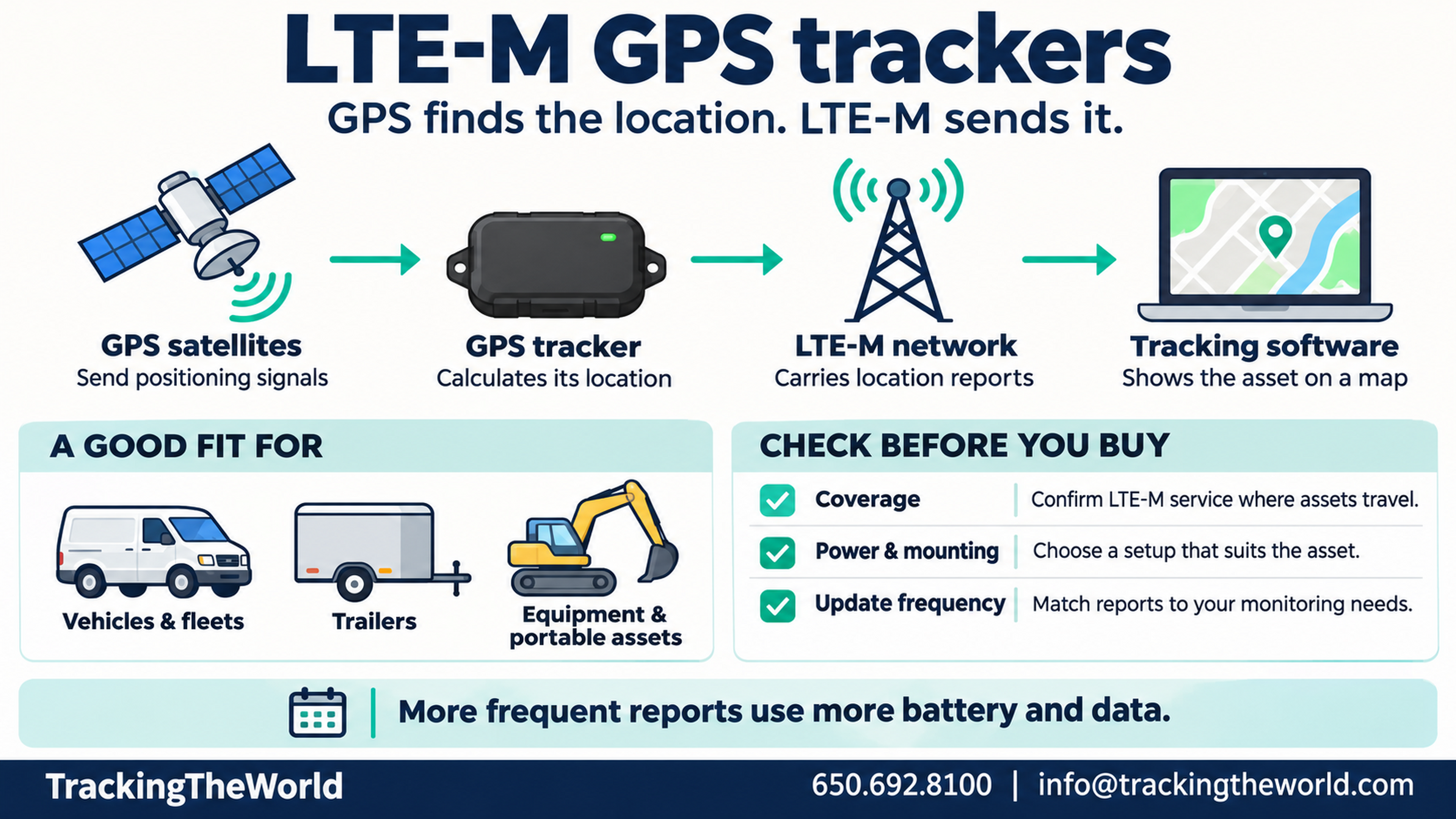
LTE-M stands for Long Term Evolution for Machines. It is a cellular standard built for connected devices. A tracker pairs it with GPS, but the two technologies do different jobs.
- GPS positioning: The receiver listens to satellites and works out where the device is. GPS only receives signals. It sends nothing.
- Cellular transmission: LTE-M carries that position over a carrier network to the tracking platform, where you see it on a map.
Think of GPS as the compass and LTE-M as the call home. Without the cellular link, the tracker knows where it is, but you never find out. Without GPS, the tracker can report in, but it has nothing useful to say.
Why is LTE-M built for devices instead of phones?
Phones need fast speeds for video, calls, and apps. Trackers send tiny messages. LTE-M gives up speed in exchange for three things that matter more to a tracker.
- Broader coverage: The signal often reaches deeper into buildings and trailers than a standard LTE link.
- Efficient power use: The device sleeps between reports, so a small battery lasts longer.
- Dependable transmission: The connection follows the device as it moves from tower to tower.
How does LTE-M compare with LTE, 2G, 3G, and NB-IoT?
- Traditional LTE: It is faster and built for heavy data. A location ping does not need that speed, and the extra power draw adds up.
- 2G and 3G: Many carriers have shut down or are retiring these older networks, so devices that depend on them may stop working.
- NB-IoT: It suits very small messages from devices that stay put. It handles movement less smoothly than LTE-M. The WT-OBD 4G, AVL-350 4G, and GAT-Pro 4G list NB-IoT support along with LTE Cat-M1.
When is LTE-M a good choice?
LTE-M works well for assets that move or sit for long periods and need steady monitoring. Three of our 4G models list LTE Cat-M1 support.
- Vehicles: A plug-in LTE-M GPS tracker like the WT-OBD 4G connects to the OBD-II port, so you can install it without tools. It also offers driving behavior monitoring, crash detection, and tow alarms.
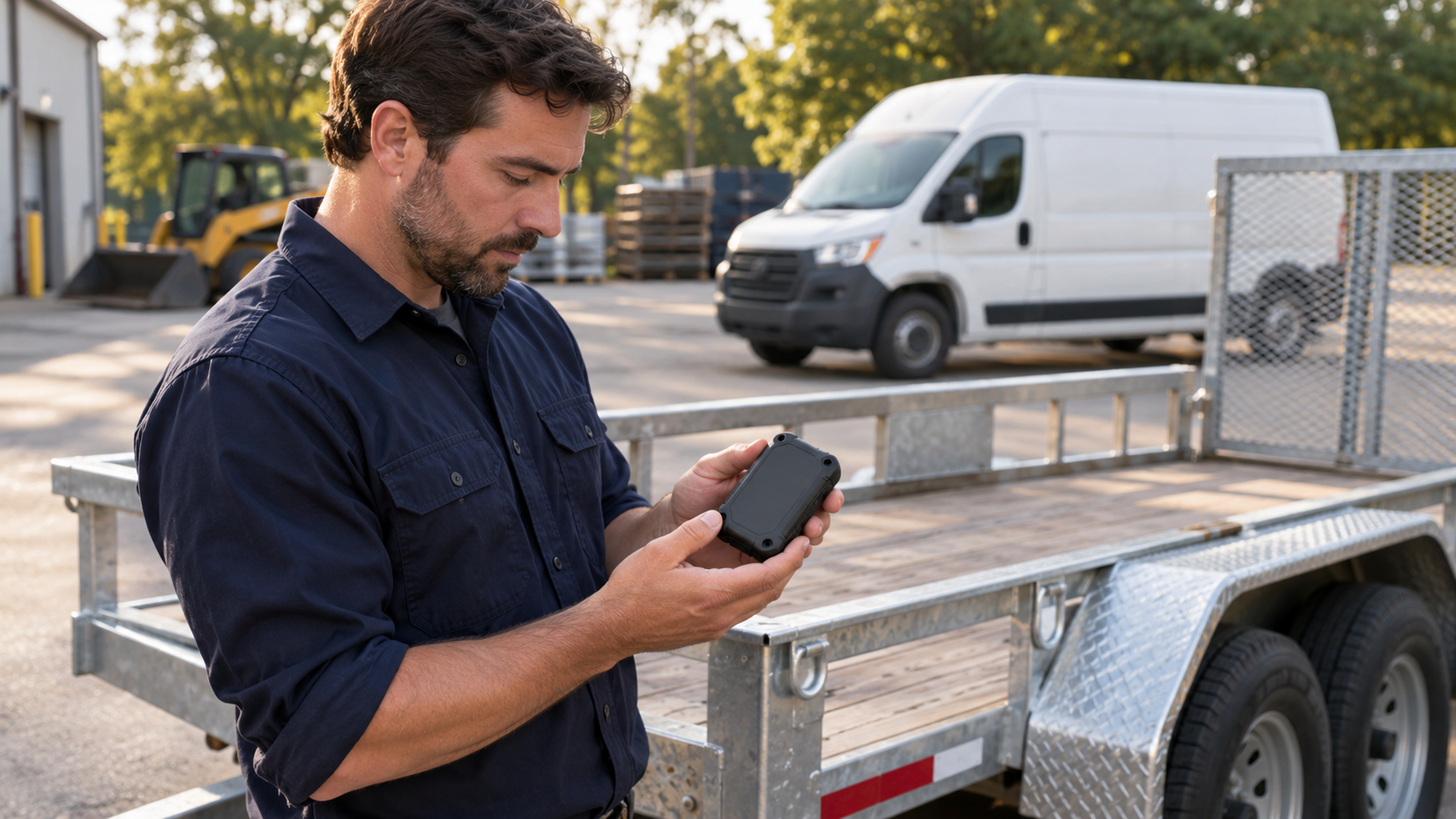
- Trailers, equipment, and portable assets: The GAT-Pro 4G is an LTE-M GPS tracker with an IP67 rating. It needs no wiring, offers an optional magnetic mount, and lists up to 7 years of standby time on its internal batteries.
- Fleets and ongoing monitoring: The AVL-350 4G is an LTE-M GPS tracker with serial ports, extra inputs, and a connection for a temperature sensor.
How does reporting frequency affect battery life and data use?
Every report wakes the device and sends a small amount of cellular data. More reports mean faster battery drain and more data use. Fewer reports stretch both. Standby time is not the same as frequent reporting, so pick the slowest schedule that still meets your needs.
When is LTE-M not the best fit?
LTE-M is not the answer for every job. It works only where your carrier supports it, so rural gaps are possible. It also suits small messages, not constant second-by-second updates or large data transfers.
Why does network compatibility matter when replacing old trackers?
A new tracker must work on a network your carrier supports. A like-for-like swap may fail if the old tracker used a retired 2G or 3G network. Check which networks serve your area first. Ask your carrier which networks it supports, and our team can help match a model.
What should you ask before you buy?
- Carrier coverage: Does my carrier support LTE-M where my assets travel?
- Power source: Do I need an internal battery or vehicle power? The AVL-350 4G runs on 8V to 32V DC.
- Update frequency: How often do I need a new location?
- Installation: Do I want a plug-in, wired, or magnetic-mount device?
- Certifications: Does the device carry the approvals my carrier requires? Our products page lists FCC and Verizon certification for the WT-OBD 4G and AVL-350 4G, and FCC, PTCRB, AT&T, and Verizon for the GAT-Pro 4G.
Frequently Asked Questions
Is LTE-M the same as 4G?
LTE-M is part of the 4G family, but it is designed for devices instead of phones. It uses less power and sends less data than the LTE on your phone. That trade works well for trackers.
Does LTE-M replace GPS?
No. GPS finds the location. LTE-M sends it. A tracker needs both to report where an asset is.
How long does an LTE-M tracker battery last?
It depends on the model and how often the device reports. The GAT-Pro 4G lists up to 7 years of standby time. Frequent reporting shortens that, so call us and we will help you plan.
Does LTE-M work indoors?
LTE-M often reaches deeper into buildings than older cellular links. However, GPS signals can still be weak indoors, so a fix may take longer. Mount the tracker with a clear view of the sky when you can.
Ready to choose a tracker? Call us at 650.692.8100, email info@trackingtheworld.com, or visit our contact page. Our office is at 2360 East Bidwell Street, Suite 111, Folsom, CA 95630.

.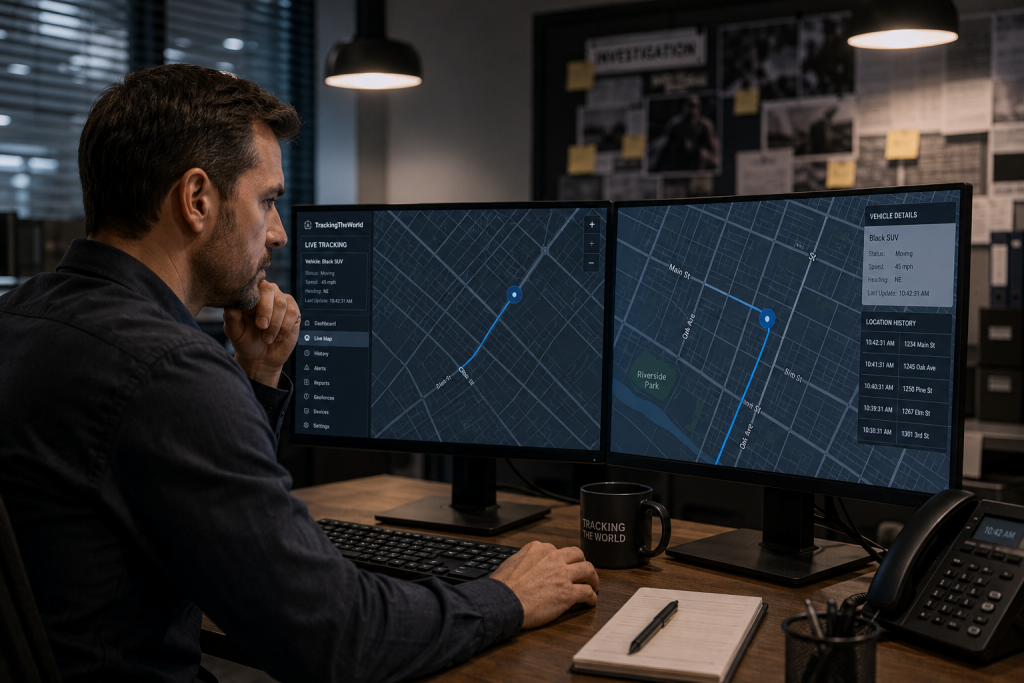
When a case depends on knowing where a vehicle is at that exact moment, tracking that arrives late or gets overlooked is worse than no tracking at all. That is where real-time covert vehicle tracking proves its worth, giving investigators, security teams, and fleet managers a live view of where a vehicle is and where it has been, while the device itself stays out of sight. Since 2003, we have built GPS tracking for law enforcement, government, private industry, and personal protection, and our vehicle devices are made for this kind of work.
| The Challenge | With TrackingTheWorld |
|---|---|
| Location updates arrive too late to act on. | Compact real-time trackers report a vehicle’s live position on a map. |
| A device that is easy to spot gets found and removed. | Small housings with hardwired, OBD, or battery options support discreet placement. |
| One vehicle, one narrow tracking need. | A full vehicle lineup covering cars, fleets, farm, mining, rental, and more. |
| No record of where a vehicle has been. | Location history and alerts through our GPS tracking software. |
Why Does Covert Vehicle Tracking Matter for Investigations?
The moment a tracker is noticed, its value drops to almost nothing. Keeping a device discreet lets you follow a vehicle’s movements without changing anyone’s behavior, which is the whole point of sensitive work. That is why real-time covert vehicle tracking fits situations where being seen would put the outcome at risk, such as:
- Protecting fleet and company vehicles from theft or misuse
- Recovering a vehicle after it goes missing
- Keeping watch on rental, lease, or high-value vehicles
- Supporting law enforcement, government, and private security operations
Each of these depends on accurate locations you can trust, delivered the moment you need it, not hours after the fact.
How Does Real-Time Vehicle Tracking Actually Work?
A tracker fixes its position using GPS satellites, then sends that location over a cellular network to our software, where it updates on a live map as the vehicle moves. Instead of reading a report long after the fact, you watch the vehicle in near-real-time and can look back over the exact route it took. Our platform is built to turn raw location data into something you can act on, including:
- Live position on a map that refreshes as the vehicle drives
- Location history so you can retrace where a vehicle has been
- Alerts you can set up around movement and other activity
You can even see a live tracking demo on our site before you commit to a device, so you know what the view looks like in practice.
Which TrackingTheWorld Devices Support Covert Vehicle Tracking?
We build a full range of vehicle trackers, so the right one depends on how you will install it and power it. Getting real-time covert vehicle tracking right starts with matching the hardware to the vehicle and the job. Our vehicle options fall into a few groups:
- OBD trackers such as the WT-OBD and WT-OBD 4G plug straight into the vehicle’s OBD port for a fast install, and the full WT-OBD 4G version can also read diagnostic codes.
- Hardwired trackers such as the AVL-50 4G, AVL-55, and AVL-300 series install inside the vehicle and offer multiple input and output options, with some supporting external GPS antennas, Garmin FMI, sensors, and voice.
- The multi-purpose Enduro Plus 4G covers vehicle use alongside personal and asset tracking, which helps when running wires is not practical.
Across the lineup, models differ by network (4G LTE, 3G, CDMA, or GSM/GPRS), install type, size, and certifications such as FCC and Verizon, so there is room to fit the device to the situation.
What Should You Look for in a Covert Tracking Setup?
Start with the vehicle, the power source, and how you plan to use the location data. The strongest setup pairs a device that installs cleanly and stays hidden with software that shows live location the instant you need it. For any team that leans on real-time covert vehicle tracking, a few questions guide the choice:
- How will your device be powered: hardwired, through the OBD port, or by battery?
- How quickly does it need to go in and come back out?
- Which cellular network has the best coverage where the vehicle travels?
- What do you need from the software: a live map, history, alerts, or all three?
Answer those, and the right device choice usually becomes clear. If you are not sure, our team can help you match a model to the situation.
Frequently Asked Questions
Is covert vehicle tracking legal?
It depends on your state and how your vehicle is used. As a general rule, you need to own the vehicle or have the proper authority to track it, and the rules are stricter for certain uses. Confirm what applies to your situation, and for law enforcement or investigative work, follow the required legal process.
How does a covert tracker stay out of sight?
We feature vehicle trackers that use compact housings. And you can hardwire them, or plug them into your OBD port, or even run them on battery power. This gives you several ways to place a device where it will not be noticed. The right option depends on the vehicle and how long the device needs to stay installed.
Can I track more than one vehicle at once?
Yes. We build our GPS tracking software to monitor multiple devices from one place, which is why it works well for fleets as well as single vehicles. You can view each vehicle’s live location and history in the same platform.
What cellular networks do your vehicle trackers use?
Depending on the model, our devices run on 4G LTE, 3G, CDMA, or GSM/GPRS. Coverage varies by area, so it is worth confirming which network fits your region before you choose, and our team can point you to the right device.
Talk to TrackingTheWorld
Ready to put real-time tracking to work without giving it away? Talk with our team about which vehicle device fits your investigation, fleet, or security needs. Call (650) 692-8100, email sales@trackingtheworld.com, or reach us through our contact page. We are located at 2360 East Bidwell Street, Suite 111, Folsom, CA 95630.