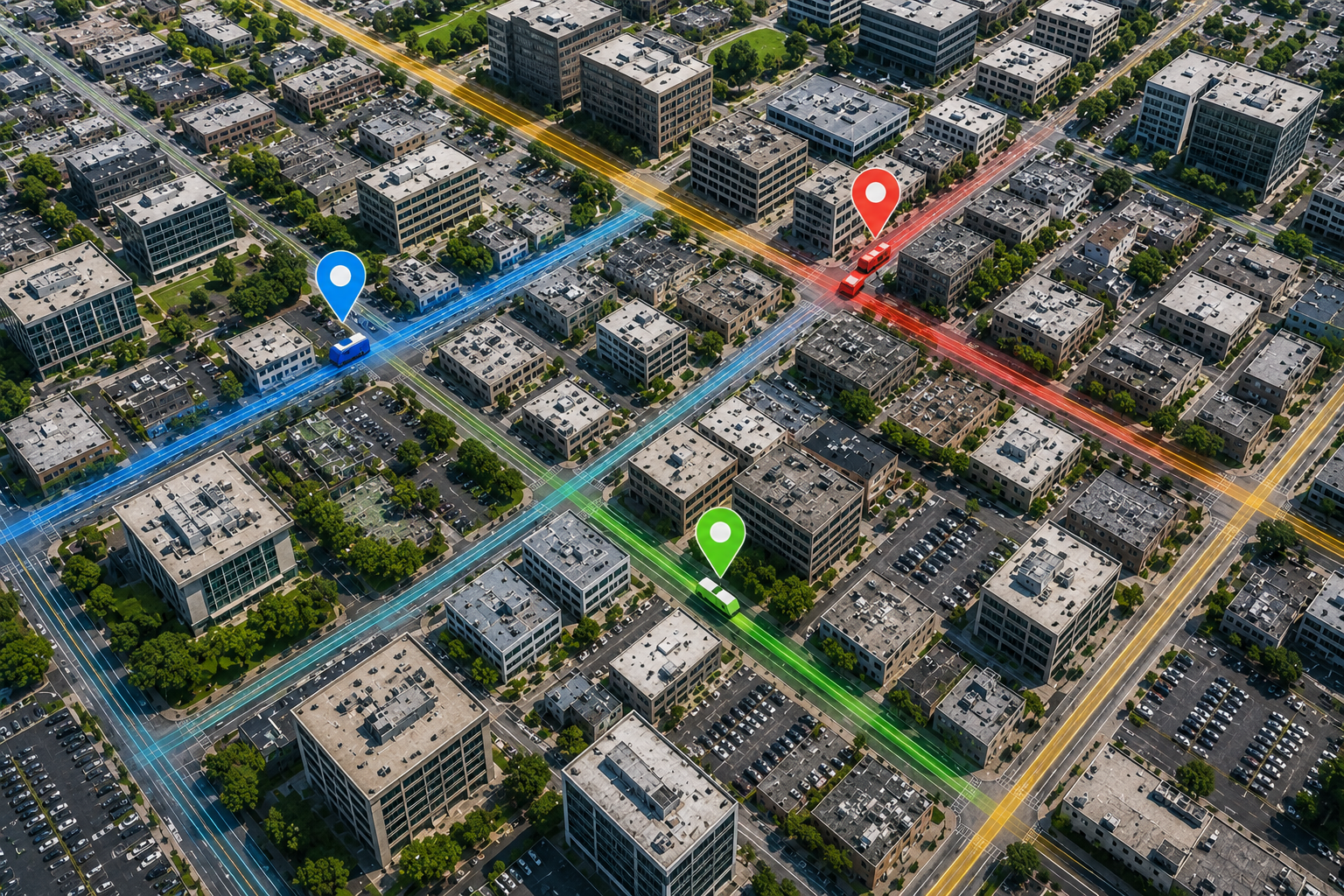
Choosing a Commercial Fleet GPS Tracking System That Scales

Most fleets do not start out big. A company adds a few trucks. It tracks them with a basic app. Then it moves on. But trouble starts later, once the fleet outgrows that basic app. So choosing the right commercial fleet GPS tracking system from the beginning matters. It saves you from ripping out and replacing your setup down the road. At Tracking The World, we specialize exclusively in GPS tracking. We have done this since 2003. Our fleet platform manages a handful of vehicles or a few hundred, without forcing you to switch tools as you grow.
| The Problem | The Solution |
|---|---|
| Vehicle tracking works, but trailers, equipment, and drivers stay invisible. | One platform covering vehicles, trailers, towing, cold storage, dash cams, and more. |
| A system sized for 10 vehicles breaks down at 100. | Fleet tools built to manage a handful of vehicles or an entire fleet from one dashboard. |
| Reports arrive too late to change a route or catch an issue. | Real-time location data and alerts as conditions change. |
| Compliance tracking lives in a separate system, or nowhere. | Electronic logging device options built into the same fleet platform. |
Why does fleet size matter when picking a GPS system?
A system that fits your fleet today may not fit it in two years. So the platform’s ceiling matters as much as its starting price. Many entry-level GPS tools rely on a simple map view built for a handful of vehicles. That works fine at first. But once a fleet adds routes, drivers, and vehicle types, those tools tend to slow down. Often, they force a switch to something else entirely.
A commercial fleet GPS tracking system built for scale handles that growth without a disruptive changeover. Our platform manages fleets of any size, from a single vehicle to a large, multi-location operation. You run it all from the same dashboard.
What should a fleet tracking system actually cover?
A fleet is rarely just trucks. It often includes trailers, specialty vehicles, and equipment that need their own kind of oversight. So a tracking system should grow into all of it. For that reason, Tracking The World’s fleet solutions span several categories built for different parts of a fleet operation:
- Vehicle tracking for cars, trucks, and general fleet assets
- Trailer tracking for equipment that moves independently of a powered vehicle
- Towing solutions for repossession and recovery operations
- Cold storage temperature monitoring for refrigerated loads
- School bus and student monitoring
- RFID waste container tracking
- Dual dash cam tracking for driver and road-facing video
- Electronic Logging Device (ELD) compliance solutions
- Ambulance management tracking
With these options under one provider, a fleet manager avoids stitching together separate logins and separate vendors as needs change.
How does real-time tracking change day-to-day fleet management?
Real-time visibility lets a fleet manager act while a situation is still unfolding, not after the fact. For instance, a dispatcher who sees where every vehicle is right now can reroute around traffic. They can confirm a delivery window. They can respond quickly if a vehicle strays from its expected path.
Day-to-day, that visibility shows up in a few concrete ways:
- Faster response when a vehicle is delayed or off-route
- More accurate ETAs for customers and dispatch
- A clear location history if a dispute or incident needs review
- Less guesswork when planning routes and driver assignments
What role does compliance play in choosing a fleet system?
Compliance tools save a fleet manager from running logging and tracking as two separate systems. Tracking the World includes Electronic Logging Devices in its fleet lineup, alongside vehicle and trailer tracking. That means hours-of-service data and location data live in the same platform. You skip the separate login and the separate vendor relationship.
This matters most for growing fleets. As a company adds drivers and vehicles, keeping compliance and tracking together in one commercial fleet GPS tracking system keeps the administrative side from becoming its own full-time job.
What questions should you ask before committing to a provider?
The right questions before you sign on tell you more about a provider’s fit than any features list. Ask these of any fleet GPS provider:
- Can the platform manage both a small starting fleet and a much larger one later, without switching tools?
- Does it cover the specific vehicle and asset types in your fleet, including trailers or specialty equipment?
- Is compliance tracking, such as ELD, built into the same system as location tracking?
- How experienced is the provider, and how long have they specialized in GPS tracking specifically?
Tracking the World has answered that last question the same way since 2003. GPS tracking is the only thing we do. Our team, led by CEO Henri Maramis, built the company’s software and hardware around that focus.
Frequently Asked Questions
What size fleet is Tracking the World’s system built for?
It manages fleets of any size, from a single vehicle to a large, multi-location operation, all from one dashboard. That range lets a growing fleet stay on the same platform instead of switching providers as it scales.
Does the platform track more than just vehicles?
Yes. Beyond standard vehicle tracking, Tracking the World offers trailer tracking, towing solutions, cold storage temperature monitoring, school bus and student monitoring, waste container tracking, dash cam tracking, and ambulance management.
Is compliance tracking included?
Yes. Electronic Logging Device (ELD) compliance solutions are part of the fleet lineup. So you manage hours-of-service and location data within the same platform, instead of through a separate system.
How long has Tracking the World been in the GPS tracking business?
Tracking the World was founded in 2003 and has specialized exclusively in GPS tracking ever since. The company operates out of its corporate office in California and serves customers around the world.
A commercial fleet GPS tracking system should fit the fleet you have now and the one you are building toward. So, to see how Tracking the World’s fleet solutions can work for your operation, contact our sales team or call us directly at (650) 692-8100. Our office is located at 2360 East Bidwell Street, Suite 111, Folsom, CA 95630. You can also reach us by email at sales@trackingtheworld.com.

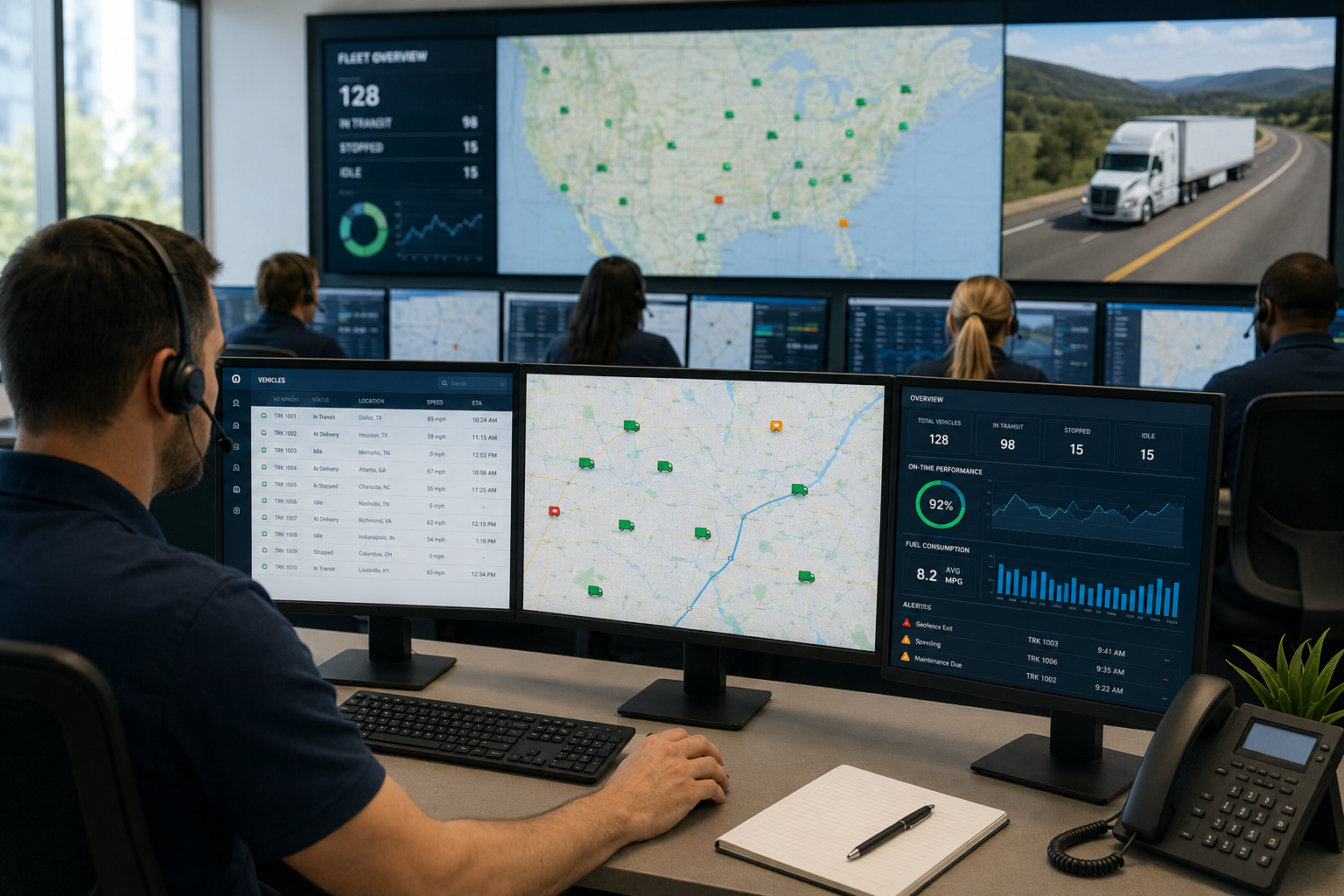
GPS Tracking for Logistics Companies: Improve Visibility and Control
GPS tracking for logistics companies is extremely important. This is because logistics companies run on timing. A late pickup, a missed delivery window, or a vehicle that goes dark somewhere on the route can throw off an entire day of scheduling. GPS tracking for logistics companies gives dispatchers a live picture of where every vehicle is, how it’s running, and whether anything needs attention before it turns into a bigger problem.
| Without GPS Tracking | With GPS Tracking |
| Dispatchers guess at vehicle location and ETAs | Real-time location data for every vehicle on an interactive map |
| Maintenance problems surface after a breakdown | Automated reminders based on mileage, engine hours, or date |
| Vehicle theft often isn’t caught until it’s too late | Geofence alerts and tow detection flag movement immediately |
| Driver behavior is hard to document or coach | Dashcam footage and event data support safety conversations |
What Does GPS Tracking Do for a Logistics Company?
GPS tracking gives a logistics company a real-time view of its entire fleet. This means from where each vehicle is right now to how it’s performing on the road. Dispatchers can watch vehicles move across an interactive map. They can even check speed and estimated arrival times. They can also see details like fuel consumption or distance traveled without calling the driver. For a company managing trucks, trailers, or other equipment across multiple routes, that visibility turns a lot of guesswork into a few clicks.
How Does Real-Time Visibility Change Day-to-Day Dispatching?
Real-time visibility means dispatchers can respond to what’s actually happening instead of waiting for a phone call. Instant alerts flag delays or unusual stops as they occur. This means a dispatcher can reroute a driver or update a customer before a small delay becomes a bigger one. This proactive approach significantly boosts operational efficiency by reducing idle time and optimizing route adjustments on the fly. Furthermore, providing customers with precise, live updates on their shipments builds trust and enhances overall satisfaction. And this ensures that the logistics chain remains transparent and reliable even when unexpected challenges arise during transit. Real-time visibility means that you can:
- See the exact location of any vehicle at any time
- Check speed and estimated arrival for a delivery in progress
- Get instant alerts when something needs attention
- Communicate accurate updates to customers waiting on freight
Can GPS Tracking Help Reduce Vehicle Downtime?
Yes. Unexpected downtime is one of the more expensive problems a logistics company can face, and GPS tracking for logistics companies helps catch mechanical issues before they force a vehicle off the road. Weekly or daily reports on vehicle faults let a fleet manager address small issues early, and maintenance reminders based on odometer readings, engine hours, or set date ranges keep oil changes, inspections, and license renewals from slipping through the cracks. Comprehensive reporting also helps a fleet manager spot patterns across the whole operation, which often points to cost savings that would be easy to miss vehicle by vehicle.
Does GPS Tracking Help Protect Vehicles from Theft?
It does. GPS tracking for logistics companies includes features built specifically for that purpose. Geofence alerts notify a fleet manager the moment a vehicle enters or leaves a set area. And tow detection can flag movement even when the ignition is off. This is often how a theft is first noticed.
For a logistics company with vehicles parked overnight at yards or job sites, that kind of alert can be the difference between recovering a vehicle quickly and losing it entirely. Dashcams add another layer of protection, recording driving events like sudden braking or hard turns and uploading footage automatically.
This also helps document what happened in the event of an incident on the road.
Is GPS Tracking Connected to ELD Compliance?
For many fleets, yes. Electronic logging devices track hours of service, and a GPS platform that integrates ELD functionality can handle that reporting alongside location tracking and vehicle diagnostics in one place. That combination means a fleet manager isn’t juggling separate systems for compliance and day-to-day tracking. This even makes it easier to demonstrate that hours-of-service rules are being followed without extra manual paperwork.
GPS tracking for logistics companies comes down to knowing what’s happening across a fleet without having to guess. Real-time location, maintenance alerts, theft protection, and ELD support work together so a fleet manager can spend less time chasing down information and more time keeping freight moving on schedule.
Frequently Asked Questions
What can GPS tracking tell a dispatcher about a delivery in progress?
A GPS platform shows a vehicle’s exact location on an interactive map along with its current speed and estimated arrival time. A dispatcher can check on a delivery at any point without contacting the driver directly.
This makes it easier to keep customers updated with accurate information.
How does GPS tracking help with fleet maintenance?
Fleet tracking platforms can send weekly or daily reports on vehicle faults. And they can issue reminders based on odometer readings, engine hours, or date ranges. That means oil changes, inspections, and other routine maintenance get scheduled proactively (instead of after something breaks down).
Can GPS tracking prevent vehicle theft?
GPS tracking includes geofence alerts and tow detection. This notifies a fleet manager when a vehicle moves outside a set area or is moved without the ignition on. Catching that movement quickly gives a much better chance of recovering a vehicle than finding out after the fact.
Does GPS tracking work with electronic logging devices for ELD compliance?
Yes. A fleet tracking platform can integrate ELD functionality to monitor hours of service and generate automated reporting. Thus compliance tracking lives in the same system as location and vehicle data instead of a separate tool.
Tracking The World has specialized in GPS tracking since 2003 from its office in Burlingame, California. To learn more about fleet tracking solutions for your logistics company, visit trackingtheworld.com/fleet, or reach the team directly at 650-692-8100 or info@trackingtheworld.com.
.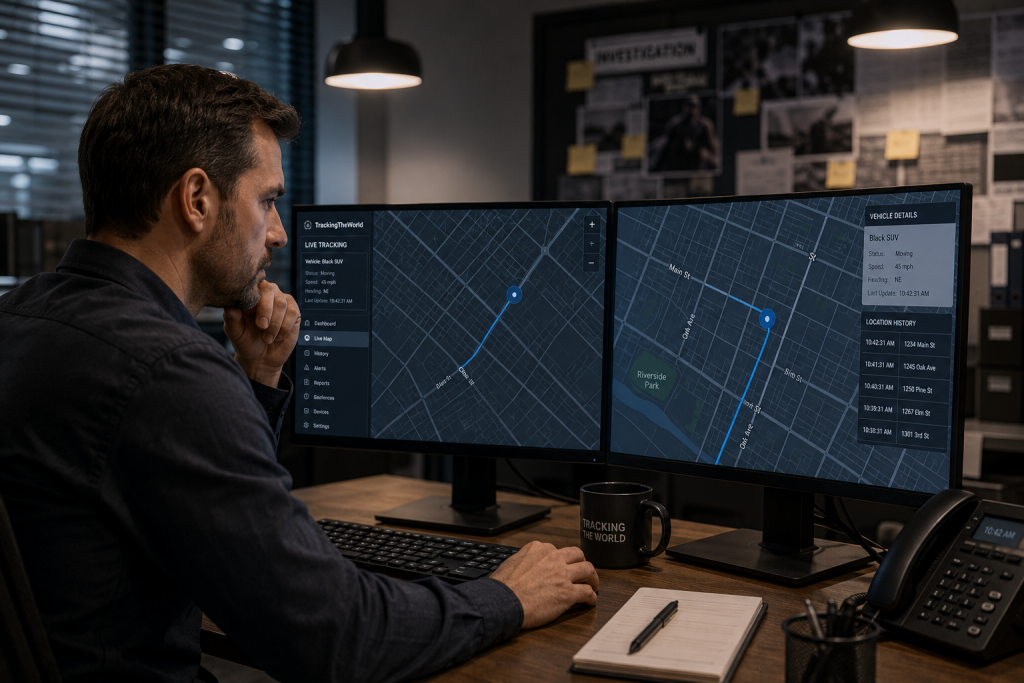
When a case depends on knowing where a vehicle is at that exact moment, tracking that arrives late or gets overlooked is worse than no tracking at all. That is where real-time covert vehicle tracking proves its worth, giving investigators, security teams, and fleet managers a live view of where a vehicle is and where it has been, while the device itself stays out of sight. Since 2003, we have built GPS tracking for law enforcement, government, private industry, and personal protection, and our vehicle devices are made for this kind of work.
| The Challenge | With TrackingTheWorld |
|---|---|
| Location updates arrive too late to act on. | Compact real-time trackers report a vehicle’s live position on a map. |
| A device that is easy to spot gets found and removed. | Small housings with hardwired, OBD, or battery options support discreet placement. |
| One vehicle, one narrow tracking need. | A full vehicle lineup covering cars, fleets, farm, mining, rental, and more. |
| No record of where a vehicle has been. | Location history and alerts through our GPS tracking software. |
Why Does Covert Vehicle Tracking Matter for Investigations?
The moment a tracker is noticed, its value drops to almost nothing. Keeping a device discreet lets you follow a vehicle’s movements without changing anyone’s behavior, which is the whole point of sensitive work. That is why real-time covert vehicle tracking fits situations where being seen would put the outcome at risk, such as:
- Protecting fleet and company vehicles from theft or misuse
- Recovering a vehicle after it goes missing
- Keeping watch on rental, lease, or high-value vehicles
- Supporting law enforcement, government, and private security operations
Each of these depends on accurate locations you can trust, delivered the moment you need it, not hours after the fact.
How Does Real-Time Vehicle Tracking Actually Work?
A tracker fixes its position using GPS satellites, then sends that location over a cellular network to our software, where it updates on a live map as the vehicle moves. Instead of reading a report long after the fact, you watch the vehicle in near-real-time and can look back over the exact route it took. Our platform is built to turn raw location data into something you can act on, including:
- Live position on a map that refreshes as the vehicle drives
- Location history so you can retrace where a vehicle has been
- Alerts you can set up around movement and other activity
You can even see a live tracking demo on our site before you commit to a device, so you know what the view looks like in practice.
Which TrackingTheWorld Devices Support Covert Vehicle Tracking?
We build a full range of vehicle trackers, so the right one depends on how you will install it and power it. Getting real-time covert vehicle tracking right starts with matching the hardware to the vehicle and the job. Our vehicle options fall into a few groups:
- OBD trackers such as the WT-OBD and WT-OBD 4G plug straight into the vehicle’s OBD port for a fast install, and the full WT-OBD 4G version can also read diagnostic codes.
- Hardwired trackers such as the AVL-50 4G, AVL-55, and AVL-300 series install inside the vehicle and offer multiple input and output options, with some supporting external GPS antennas, Garmin FMI, sensors, and voice.
- The multi-purpose Enduro Plus 4G covers vehicle use alongside personal and asset tracking, which helps when running wires is not practical.
Across the lineup, models differ by network (4G LTE, 3G, CDMA, or GSM/GPRS), install type, size, and certifications such as FCC and Verizon, so there is room to fit the device to the situation.
What Should You Look for in a Covert Tracking Setup?
Start with the vehicle, the power source, and how you plan to use the location data. The strongest setup pairs a device that installs cleanly and stays hidden with software that shows live location the instant you need it. For any team that leans on real-time covert vehicle tracking, a few questions guide the choice:
- How will your device be powered: hardwired, through the OBD port, or by battery?
- How quickly does it need to go in and come back out?
- Which cellular network has the best coverage where the vehicle travels?
- What do you need from the software: a live map, history, alerts, or all three?
Answer those, and the right device choice usually becomes clear. If you are not sure, our team can help you match a model to the situation.
Frequently Asked Questions
Is covert vehicle tracking legal?
It depends on your state and how your vehicle is used. As a general rule, you need to own the vehicle or have the proper authority to track it, and the rules are stricter for certain uses. Confirm what applies to your situation, and for law enforcement or investigative work, follow the required legal process.
How does a covert tracker stay out of sight?
We feature vehicle trackers that use compact housings. And you can hardwire them, or plug them into your OBD port, or even run them on battery power. This gives you several ways to place a device where it will not be noticed. The right option depends on the vehicle and how long the device needs to stay installed.
Can I track more than one vehicle at once?
Yes. We build our GPS tracking software to monitor multiple devices from one place, which is why it works well for fleets as well as single vehicles. You can view each vehicle’s live location and history in the same platform.
What cellular networks do your vehicle trackers use?
Depending on the model, our devices run on 4G LTE, 3G, CDMA, or GSM/GPRS. Coverage varies by area, so it is worth confirming which network fits your region before you choose, and our team can point you to the right device.
Talk to TrackingTheWorld
Ready to put real-time tracking to work without giving it away? Talk with our team about which vehicle device fits your investigation, fleet, or security needs. Call (650) 692-8100, email sales@trackingtheworld.com, or reach us through our contact page. We are located at 2360 East Bidwell Street, Suite 111, Folsom, CA 95630.