| Without Fleet Tracking | With TrackingTheWorld Fleet Tracking |
|---|---|
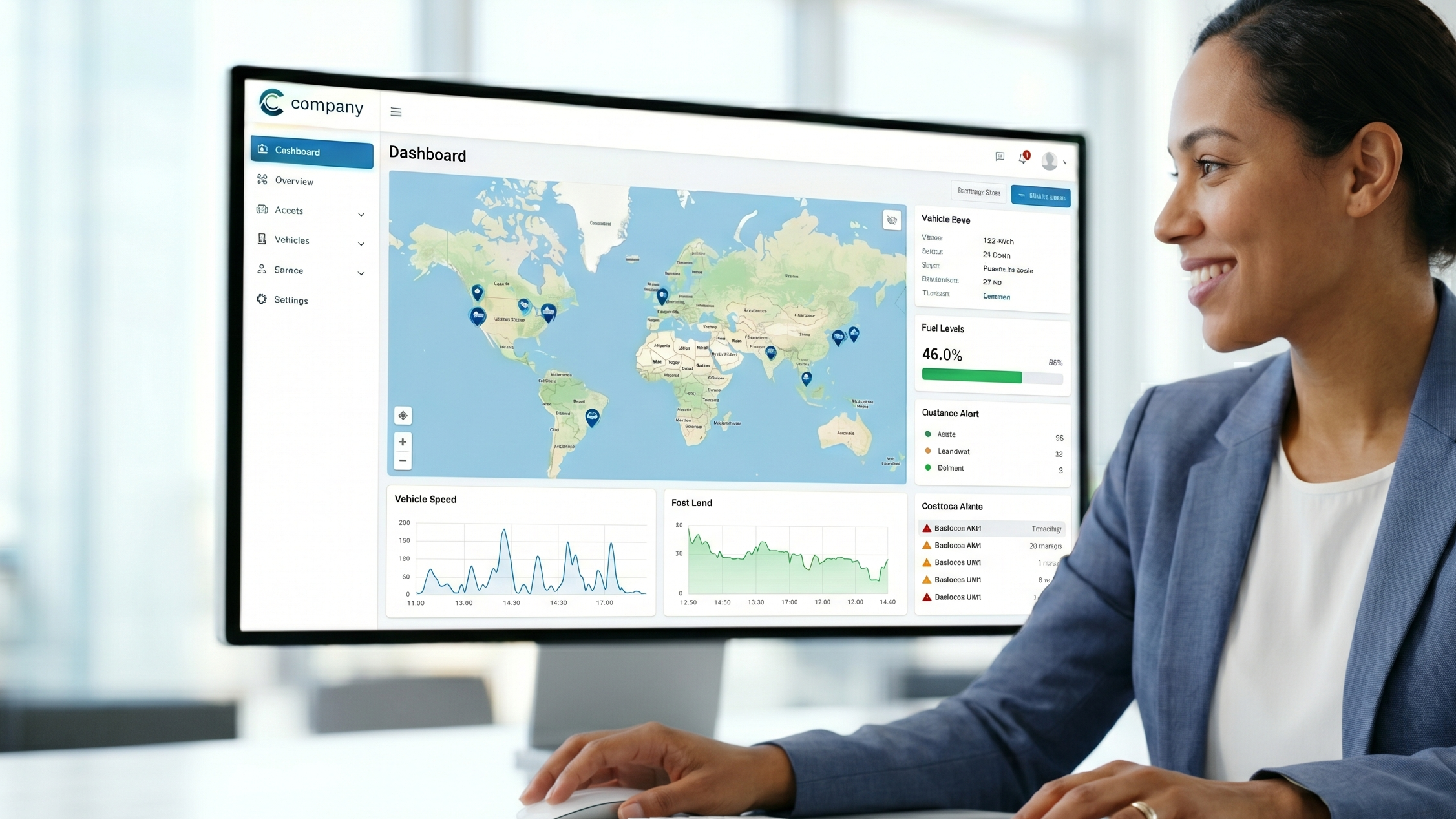
| Dispatchers guess at truck locations and ETAs | Real-time GPS location and route history for every truck |
| Damage disputes rely on he-said, she-said accounts | Dual dash cam footage documents each job start to finish |
| No way to confirm a tow actually happened | PTO engagement data verifies exactly when a tow took place |
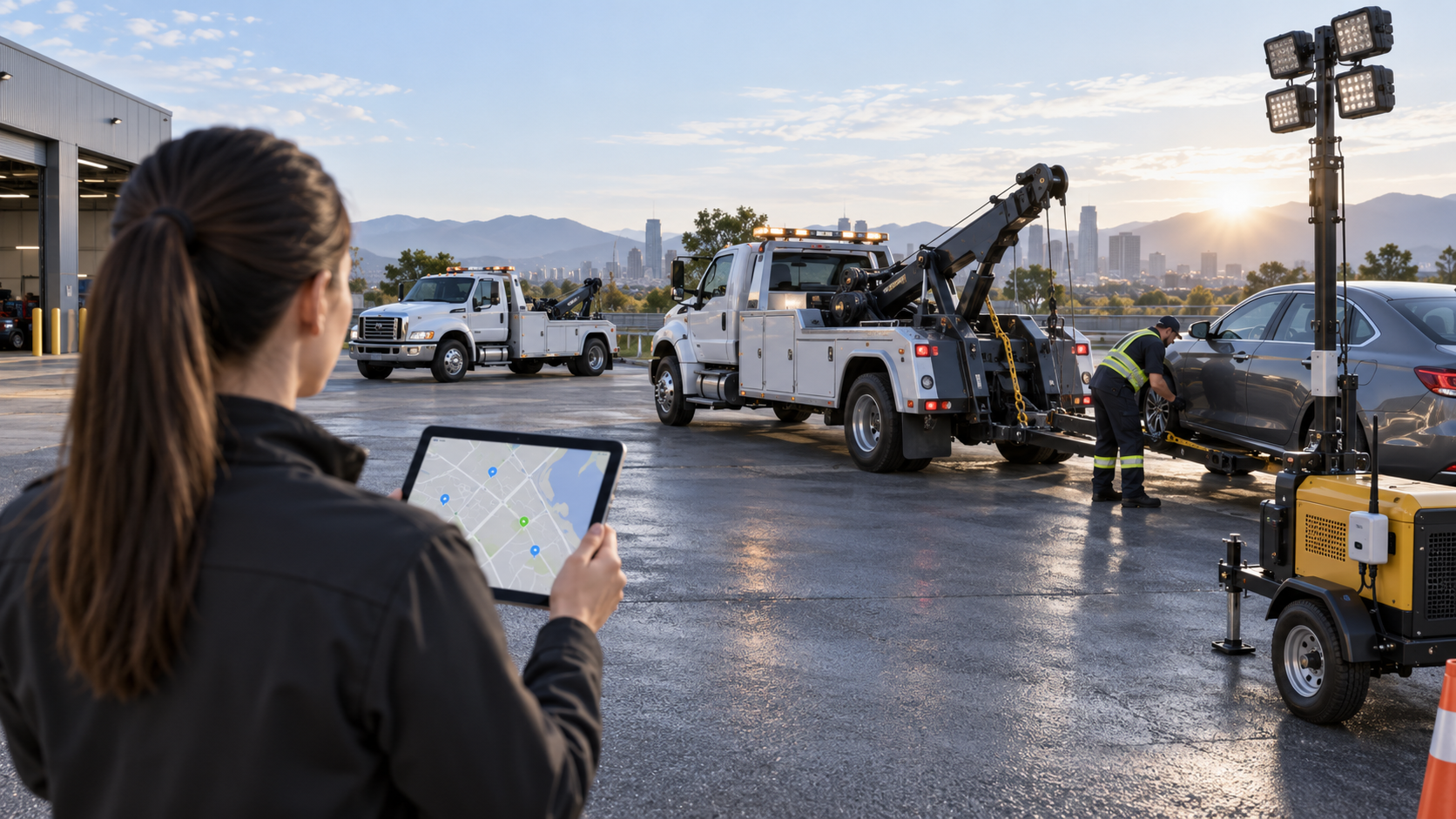
| Generators and recovery gear go missing on job sites | IoT sensors track high-value equipment and flag movement |
| Fleet status is only visible from the office | Live data available from a phone, tablet, or desktop |
| Data is scattered across separate systems and spreadsheets | One unified dashboard for the entire operation |
What Challenges Do Towing Operations Face Without Fleet Tracking?
Towing runs on speed and accuracy, and without the right tools those are the first things to slip. Dispatchers have to guess at truck locations, drivers have no record to point to if a customer disputes a job, and fuel or maintenance costs pile up unnoticed until they show up as a bigger bill. As a fleet grows, phone calls and paper logs stop being enough to keep track of it all.
How Does Live GPS Tracking and Route History Work?
With tow truck fleet tracking, you can see your entire fleet in real time and pull up route history whenever you need it. Our real-time GPS tracking shows the current location of every truck, and the system stores historical data so you can review previously traveled routes, verify arrival and departure times at a job site, and settle a question about a stop without calling the driver.
How Do Smart Dash Cams Support Driver Accountability?
Dash cam footage gives you a record of what happened during a tow, not just a location pin. Our dual dash cam covers the road ahead and the cab, and records driver behavior events such as sudden braking or rapid acceleration. That footage protects your drivers and your business if a customer disputes a charge or claims a truck caused damage, and it gives you a way to coach drivers on safety with real examples instead of guesswork.
How Does PTO Monitoring Verify Tow Jobs?
Power take-off (PTO) monitoring tells you exactly when a truck’s PTO, the system that raises and lowers the boom or wheel-lift, was engaged. Paired with GPS location, that data is useful for confirming that a tow actually took place at the time and place a customer or dispatcher expects, and it can be pulled into a report if a job ever needs to be verified after the fact.
How Can IoT Asset Tracking Protect Recovery Equipment?
Generators, light towers, and other recovery equipment tend to walk off a job site if nobody is watching them. Our IoT asset tracking uses IoT tags and sensors to track this equipment’s location, so you always know where it is and can set alerts if it leaves a defined area.
- Track high-value equipment such as generators and light towers
- Set geofence alerts for unauthorized movement
- Cut down on time spent searching a yard or job site for gear
Can You Manage Your Fleet from a Phone or Tablet?
Yes. Dispatchers, managers, and drivers all get views tailored to their role, and none of them need to be at a desk to use it. You can check a truck’s location, pull up a report, or see the status of a job from a phone or tablet just as easily as from the office, which matters most when you are the one out on the road handling a dispatch.
What Are the Benefits of a Unified Fleet Management Platform?
Bringing GPS, dash cam footage, PTO data, and IoT asset tracking into one place is what makes tow truck fleet tracking useful day to day instead of just another tool to check. Reports pull from every data source at once, new trucks or equipment are easier to bring online as the fleet grows, and everyone from dispatch to management is working from the same information.
- One login instead of juggling separate tools for GPS, cameras, and equipment
- Reports that combine location, driver, and equipment data in one place
- A platform that scales as trucks and equipment are added
Why Do Towing Companies Choose TrackingTheWorld?
Towing companies rely on our platform because it brings location, video, and equipment data together. Instead of leaving it scattered across separate tools. If you are ready to see what a connected tow truck fleet tracking platform looks like for your operation, our team can walk you through it.
Frequently Asked Questions
What is tow truck fleet tracking?
Tow truck fleet tracking is a system that combines GPS location, dash cam footage, PTO engagement, and IoT equipment data to show you where your trucks and gear are in real time. It replaces phone check-ins and guesswork with a live view of the fleet. Towing companies use it for dispatch, safety, and maintenance decisions.
Does dash cam footage help with damage disputes?
Yes. Dual dash cam footage documents the vehicle from pickup through drop-off. This gives you a record to reference if a customer disputes a charge or claims the truck caused damage. It also supports driver safety by encouraging responsible driving habits.
Can I track expensive equipment like generators or light towers?
Yes. IoT tags and sensors can be attached to recovery equipment such as generators and light towers. This gives you real-time location data and alerts if the equipment leaves a job site or yard without authorization.
Can I access fleet data from my phone?
Yes. The platform is built for remote access. It has views for dispatchers, managers, and drivers that work from a phone, tablet, or computer. You do not need to be in the office to check a truck’s location or review a report.
We have specialized in GPS tracking since 2003, and our team can help you find the right fit for your towing fleet. Contact us at (650) 692-8100, or reach us at 2360 East Bidwell Street, Suite 111, Folsom, CA 95630, to talk through what your trucks need.

GPS Tracking for Logistics Companies: Improve Visibility and Control
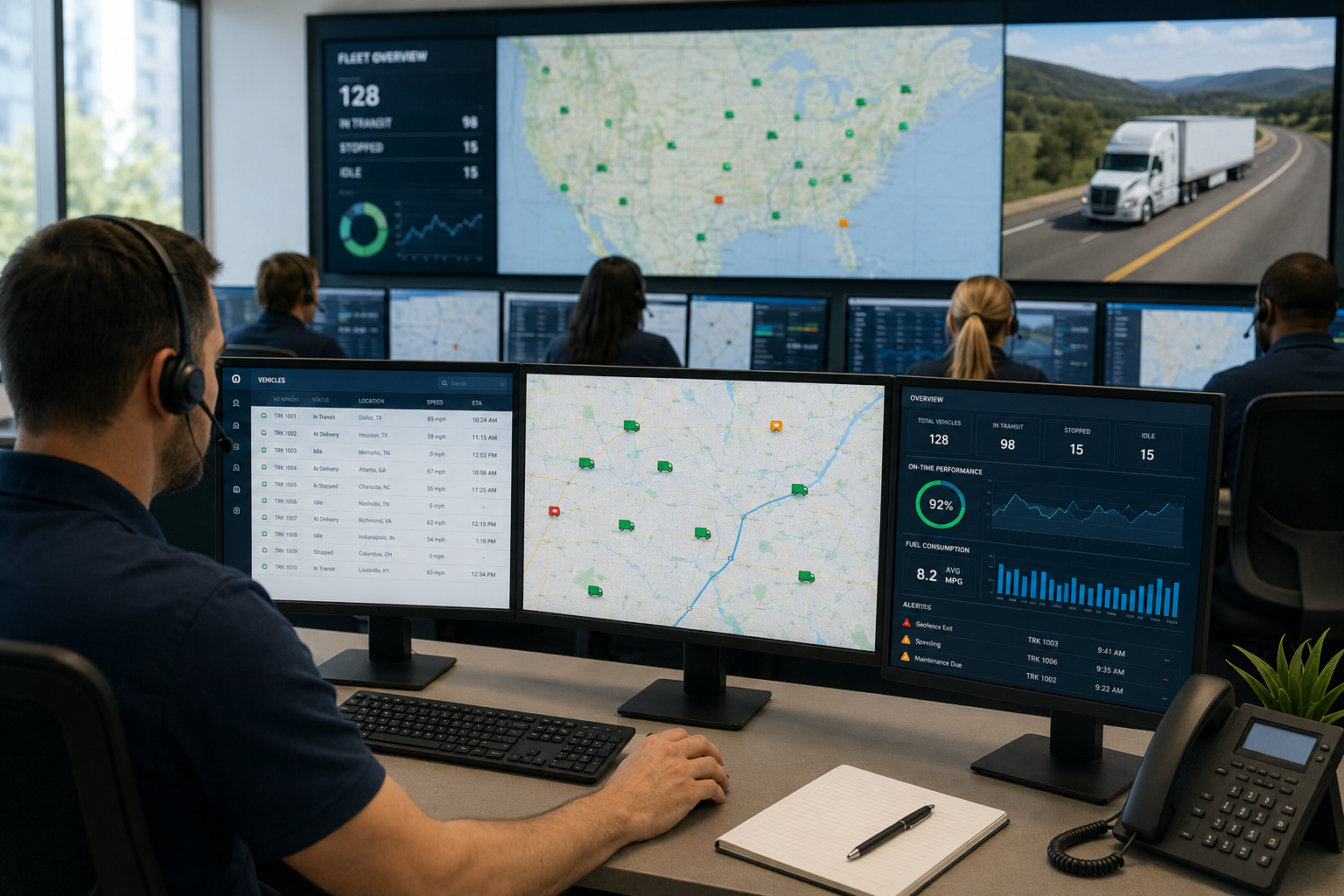
GPS tracking for logistics companies is extremely important. This is because logistics companies run on timing. A late pickup, a missed delivery window, or a vehicle that goes dark somewhere on the route can throw off an entire day of scheduling. GPS tracking for logistics companies gives dispatchers a live picture of where every vehicle is, how it’s running, and whether anything needs attention before it turns into a bigger problem.
| Without GPS Tracking | With GPS Tracking |
| Dispatchers guess at vehicle location and ETAs | Real-time location data for every vehicle on an interactive map |
| Maintenance problems surface after a breakdown | Automated reminders based on mileage, engine hours, or date |
| Vehicle theft often isn’t caught until it’s too late | Geofence alerts and tow detection flag movement immediately |
| Driver behavior is hard to document or coach | Dashcam footage and event data support safety conversations |
What Does GPS Tracking Do for a Logistics Company?
GPS tracking gives a logistics company a real-time view of its entire fleet. This means from where each vehicle is right now to how it’s performing on the road. Dispatchers can watch vehicles move across an interactive map. They can even check speed and estimated arrival times. They can also see details like fuel consumption or distance traveled without calling the driver. For a company managing trucks, trailers, or other equipment across multiple routes, that visibility turns a lot of guesswork into a few clicks.
How Does Real-Time Visibility Change Day-to-Day Dispatching?
Real-time visibility means dispatchers can respond to what’s actually happening instead of waiting for a phone call. Instant alerts flag delays or unusual stops as they occur. This means a dispatcher can reroute a driver or update a customer before a small delay becomes a bigger one. This proactive approach significantly boosts operational efficiency by reducing idle time and optimizing route adjustments on the fly. Furthermore, providing customers with precise, live updates on their shipments builds trust and enhances overall satisfaction. And this ensures that the logistics chain remains transparent and reliable even when unexpected challenges arise during transit. Real-time visibility means that you can:
- See the exact location of any vehicle at any time
- Check speed and estimated arrival for a delivery in progress
- Get instant alerts when something needs attention
- Communicate accurate updates to customers waiting on freight
Can GPS Tracking Help Reduce Vehicle Downtime?
Yes. Unexpected downtime is one of the more expensive problems a logistics company can face, and GPS tracking for logistics companies helps catch mechanical issues before they force a vehicle off the road. Weekly or daily reports on vehicle faults let a fleet manager address small issues early, and maintenance reminders based on odometer readings, engine hours, or set date ranges keep oil changes, inspections, and license renewals from slipping through the cracks. Comprehensive reporting also helps a fleet manager spot patterns across the whole operation, which often points to cost savings that would be easy to miss vehicle by vehicle.
Does GPS Tracking Help Protect Vehicles from Theft?
It does. GPS tracking for logistics companies includes features built specifically for that purpose. Geofence alerts notify a fleet manager the moment a vehicle enters or leaves a set area. And tow detection can flag movement even when the ignition is off. This is often how a theft is first noticed.
For a logistics company with vehicles parked overnight at yards or job sites, that kind of alert can be the difference between recovering a vehicle quickly and losing it entirely. Dashcams add another layer of protection, recording driving events like sudden braking or hard turns and uploading footage automatically.
This also helps document what happened in the event of an incident on the road.
Is GPS Tracking Connected to ELD Compliance?
For many fleets, yes. Electronic logging devices track hours of service, and a GPS platform that integrates ELD functionality can handle that reporting alongside location tracking and vehicle diagnostics in one place. That combination means a fleet manager isn’t juggling separate systems for compliance and day-to-day tracking. This even makes it easier to demonstrate that hours-of-service rules are being followed without extra manual paperwork.
GPS tracking for logistics companies comes down to knowing what’s happening across a fleet without having to guess. Real-time location, maintenance alerts, theft protection, and ELD support work together so a fleet manager can spend less time chasing down information and more time keeping freight moving on schedule.
Frequently Asked Questions
What can GPS tracking tell a dispatcher about a delivery in progress?
A GPS platform shows a vehicle’s exact location on an interactive map along with its current speed and estimated arrival time. A dispatcher can check on a delivery at any point without contacting the driver directly.
This makes it easier to keep customers updated with accurate information.
How does GPS tracking help with fleet maintenance?
Fleet tracking platforms can send weekly or daily reports on vehicle faults. And they can issue reminders based on odometer readings, engine hours, or date ranges. That means oil changes, inspections, and other routine maintenance get scheduled proactively (instead of after something breaks down).
Can GPS tracking prevent vehicle theft?
GPS tracking includes geofence alerts and tow detection. This notifies a fleet manager when a vehicle moves outside a set area or is moved without the ignition on. Catching that movement quickly gives a much better chance of recovering a vehicle than finding out after the fact.
Does GPS tracking work with electronic logging devices for ELD compliance?
Yes. A fleet tracking platform can integrate ELD functionality to monitor hours of service and generate automated reporting. Thus compliance tracking lives in the same system as location and vehicle data instead of a separate tool.
Tracking The World has specialized in GPS tracking since 2003 from its office in Burlingame, California. To learn more about fleet tracking solutions for your logistics company, visit trackingtheworld.com/fleet, or reach the team directly at 650-692-8100 or info@trackingtheworld.com.
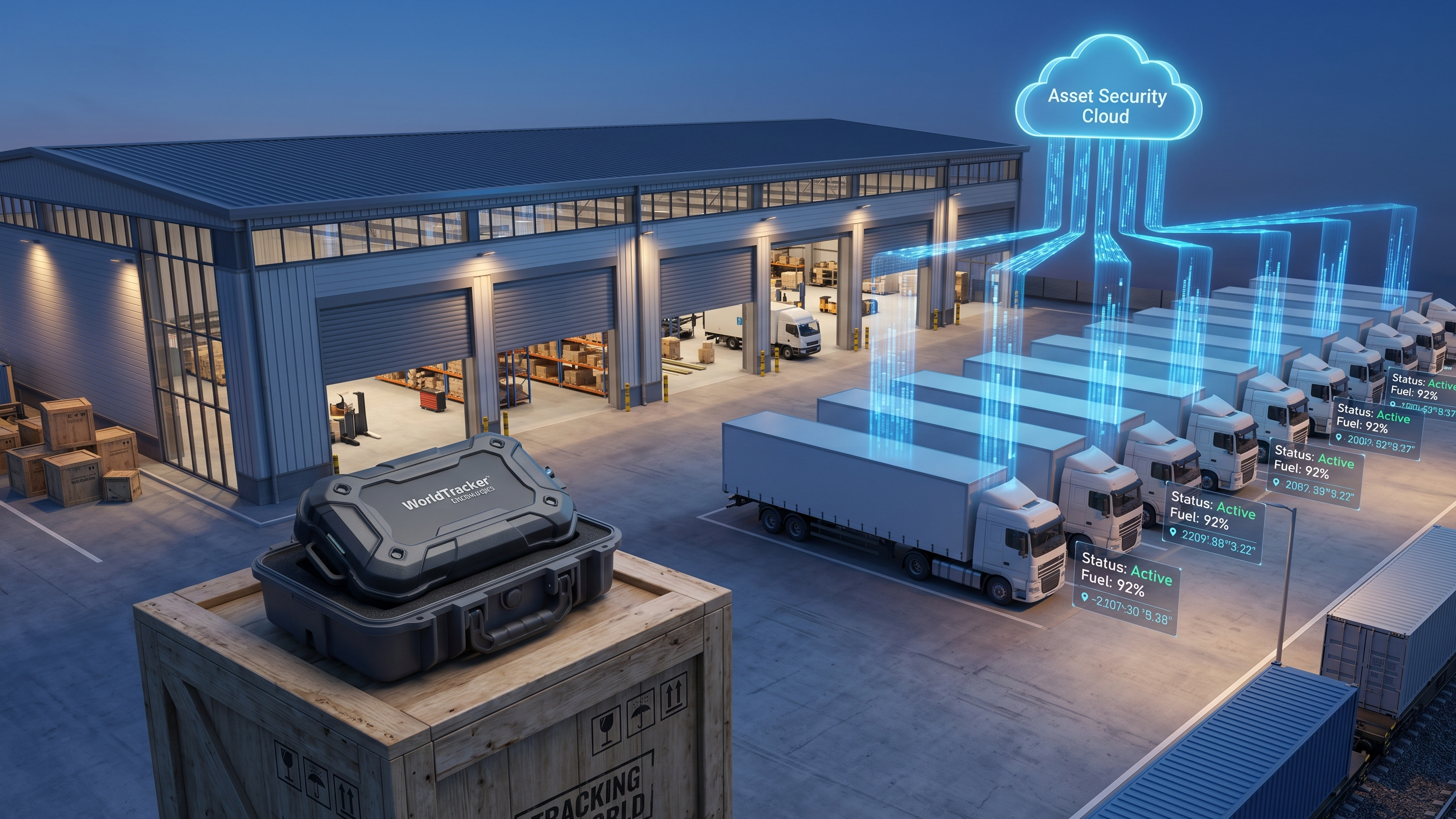
The global market for GPS hardware and telematics is projected to reach $4.52 billion in 2026 (Research Nester). And because of this market growth, there is now a massive opening for entrepreneurs. On the one hand, starting a tracking business from scratch requires immense capital for server infrastructure and software development. But using Tracking the World’s white label GPS tracking software allows you to bypass these hurdles.
You get a ready-to-use platform that carries your brand.
High-Velocity Market Entry for Resellers
White label GPS tracking software deployments utilize multi-tenant cloud architecture to provide branded portals for asset monitoring.
Features:
- Turn-key software deployments integrate with 500-plus hardware models through proprietary protocols.
- Resellers manage client accounts via centralized dashboards while maintaining custom domain mapping and unique CSS skins.
- High-frequency data polling and automated reporting allow you to manage your fleet in real-time.
| Category | Value | Results In: |
| Initial Setup Time | 30 to 60 Minutes | Rapid deployment of branded portals. |
| Asset Licensing Cost | $0.20 to $2.00 | Low monthly cost per active device (Industry Benchmark). |
| Market Growth Rate | 13.3% CAGR | Becoming part of a projected industry expansion through 2035 (Spherical Insights). |
| Hardware Support | 500+ Models | Compatibility with major manufacturers. |
Businesses today demand more than “dots on a map.” They need data regarding fuel consumption and driver safety.
Our Tracking the World white label GPS tracking software provides these analytics without the technical overhead. You focus on sales while we manage the backend stability and security.
Core Technical Specifications and Performance
If a reseller (like you) selects a private label server (like us), then your business gains total control over customer data and billing cycles. This white label setup is perfect for those who want to build a long-term brand. You are not just selling a service: you are building your own asset.
Reselling Aspects:
- Multi-tenant architecture for managing thousands of unique client accounts.
- Custom domain mapping and CSS skinning for consistent brand identity.
- API integration for connecting external ERP or proprietary billing systems.
- Automated reporting triggers for geofencing and speed alerts.
- Secure data storage with 99.9% uptime guarantees for mission-critical assets.
Reliability is the most important factor in this industry. Tracking the World provides the white label GPS tracking software that powers your vision. You set the margins. You own the relationship. Most resellers see a return on investment within the first quarter of operation.
Strategic Advantages of Private Labeling
Reselling white label GPS tracking software eliminates the need for a dedicated DevOps team. This is a significant cost-saver. Building a platform from zero often costs over $150,000 in initial development (SaaS Dev Industry Average). Not only this, but ongoing maintenance and security patches add thousands more every month. By using a proven system, you skip these expenses entirely.
Scaling is amazing, by the way.
When you add a new client, you simply create a new sub account. Cloud-server resources scale automatically. You do not have to worry about server crashes (from load) during peak usage times. If your deployment needs more instances, it simply gets more instances. If you don’t know what this means, contact us and we can explain.
The bottom line is that all this tech allows you to say yes to large fleet contracts without hesitation.
Navigating the Technical Landscape
The hardware side of the business is equally important. We offer a variety of devices that are preconfigured to work with our software. This means you do not have to spend hours troubleshooting connection strings or APN settings.
Everything works right out of the box.
If you choose to use third-party hardware, our software is flexible. We support a wide range of protocols. This flexibility is a major selling point for your clients. They might already have devices installed. You can migrate them to your new branded platform without requiring them to buy new hardware. That is a powerful value proposition.
Marketing Your Branded Solution
Selling to local businesses requires a personal touch. You are their local expert. You understand their specific needs in your city. Whether it is a small plumbing fleet or a large logistics company, you provide the solution.
Focus on the pain points.
For example, fuel theft is a major issue for many companies. Unauthorized vehicle use after hours is another. Your (branded) software solves these problems. Show them the reports. Show them how much money they will save.
When your client sees that the software pays for itself in fuel savings, the sale becomes easy.
Long-Term Business Stability
A tracking business provides recurring revenue. This is the gold standard for any business model. Once a device is installed, the client typically stays for years. The churn rate is very low if your service is reliable.
We provide the technical backbone that ensures that reliability. Our servers are housed in the same Tier III data centers that house Fortune 500 companies.
We use redundant power supplies and multiple internet uplinks. Your clients will experience a smooth interface every time they log in. This builds trust in your brand.
Customization and User Experience
Your clients will see your logo every time they track a vehicle. They will get emails from your domain. This level of professional branding is essential for attracting high-value accounts.
The user interface is intuitive. It does not require a manual to understand. Most users can learn the basic functions in under ten minutes. This reduces the number of support calls you receive. You can spend more time finding new business and less time explaining how to set a geofence.
Future-Proofing Your Enterprise
The world of IoT (“Internet of Things”) and GPS (“Global Positioning Systems”) is changing fast. For example, new sensors for temperature and humidity are becoming common. But our software stays ahead of these trends. In fact, we constantly update our reseller platform with new features.
You benefit from these updates automatically. This is because there is no extra charge for software improvements. Also, as we add new capabilities, you can offer them to your clients. This keeps your business competitive against larger national brands.
Common Reseller Questions
If a prospective reseller evaluates startup requirements, then identifying specific operational costs becomes necessary. Most platforms charge based on active connections rather than flat monthly fees.
How much can I charge my customers for tracking services? Standard market rates for basic tracking vary between $15.00 and $35.00 per month per unit (Industry Average). And advanced features like fuel monitoring or video telematics allow higher monthly premiums. Most resellers target a 50% to 70% profit margin after software licensing and cellular data costs are settled.
Do I need to manage the cellular data plans for the devices? Resellers typically choose between two primary models for data management. You can provide a turnkey solution including the SIM card and data plan, or you can allow the customer to provide their own data. Providing the data plan increases your recurring revenue and simplifies the setup for the end user.
Is technical support provided for my end users? Tracking the World provides high-level technical support to you as the reseller. Thus, you remain the primary point of contact for your clients. This structure maintains your brand authority. We provide the documentation and training materials you need to answer common questions and troubleshoot hardware issues.
Can I integrate the tracking data into other software applications? Our platform includes a robust API for data portability. And then if a client uses a specific dispatching software or an accounting platform, the GPS data can be pushed to those systems. This integration capability is often a requirement for enterprise-level contracts involving large fleets.
Partner with Tracking the World
Launch your own tracking brand today. We offer the tools to scale from ten devices to ten thousand. Our team has decades of experience in the GPS industry. We know what works and what does not.
We are here to help you succeed.
Visit our contact page or call 650-692-8100 to discuss your custom server setup and hardware bundles. Our experts will guide you through the process of selecting the right plan for your business goals. Take the first step toward building a profitable recurring revenue business in the growing telematics industry!