Why GPS tracking is key: if you manage a fleet involved in multi-stop deliveries, you know it is a high-stakes balancing act. When your driver has twenty drop-offs across a crowded metro area, every minute of idling or wrong turns compounds into a massive loss for your company.
You must realize that efficiency in logistics is not about driving faster.
It is about knowing exactly where every asset sits at any given moment. At Tracking the World, we see how precise data transforms a chaotic route into a streamlined operation. When you use GPS tracking for logistics companies, you get a level of oversight that manual logs simply cannot match.
The Technical Reality of Multi-Stop Complexity
In a standard long-haul route, a tracker pings occasionally to confirm the truck is on the highway. Multi-stop operations are much different. These routes require high-frequency updates because the “action” happens in the transitions between stops. If your device only pings every ten minutes, you might miss three different deliveries in a dense urban zone. This creates a data gap that makes it impossible to verify proof of presence or arrival times.
| Operational Metric | Technical Requirement | Value for Logistics |
| Ping Frequency | 10 to 30 Seconds | Essential for urban stop accuracy. |
| Battery Capacity | 5,000mAh to 12,000mAh | Supports high frequency draws without daily charging. |
| Geofencing | Polygonal Borders | Triggers alerts the instant a vehicle enters a loading dock. |
| Accelerometer | 3 Axis Sensing | Detects harsh braking or idling during long offloads. |
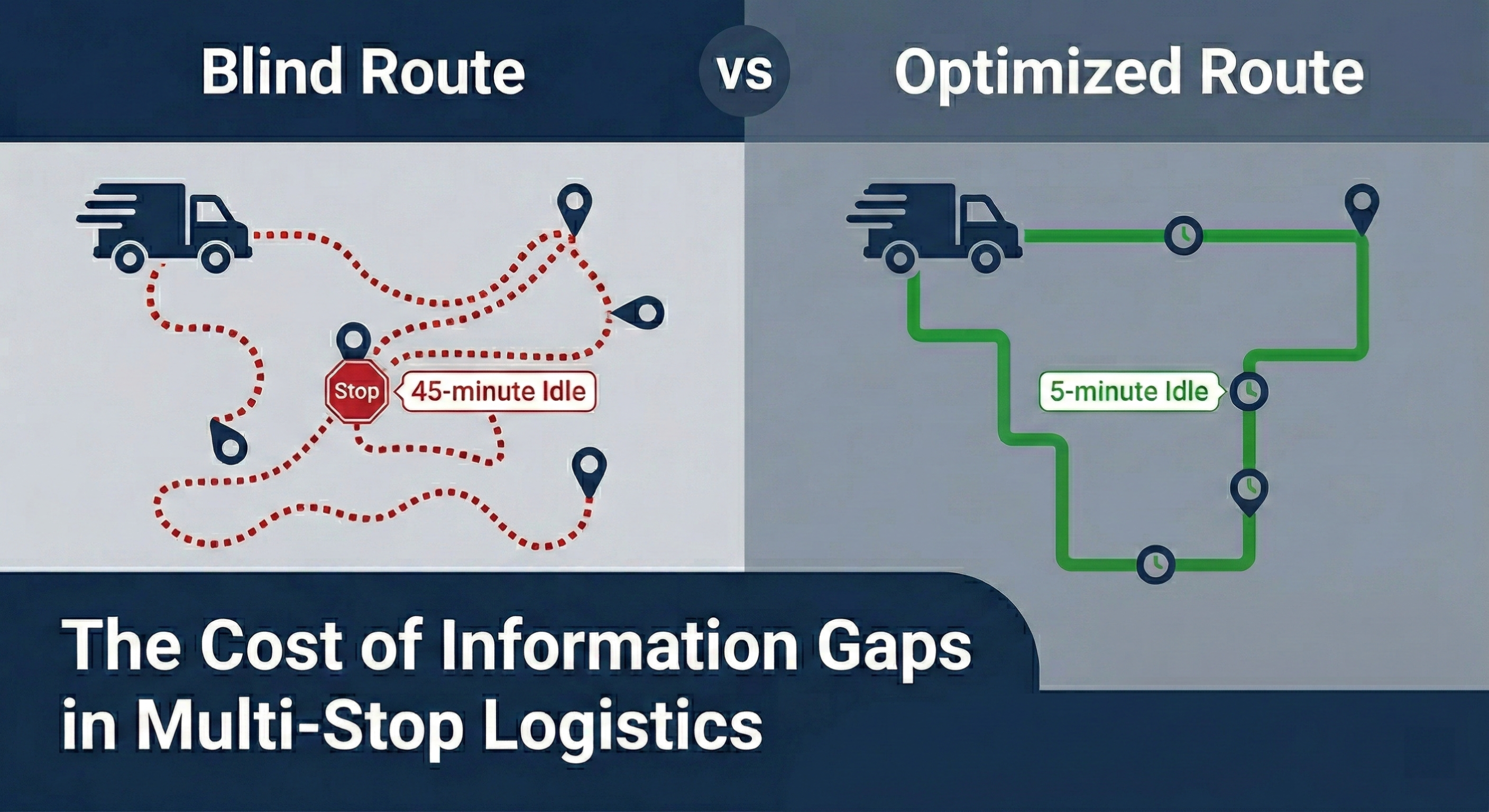
The key problem in this sector usually stems from fuel waste and missed windows. When a vehicle idles at a warehouse for forty minutes because the dispatcher did not know the dock was full, that is pure profit burning away. High-quality GPS tracking for logistics companies provides the visibility needed to reroute drivers before they get stuck in a bottleneck.
Why Hardware Choice Dictates Field Success
Reliability in logistics depends on the physical robustness of the tracker. Many providers offer cheap plastic units that fail the moment they face engine heat or heavy vibration. Our Enduro series is built for these exact rigors. It stays attached and keeps transmitting even when the environment is hostile.
For many firms, the best approach is a hardwired solution like the WT-OBD 4G. It pulls power directly from the vehicle (via the OBD II port).
This removes the human error factor of forgetting to charge a portable unit. If a driver leaves the yard with a dead tracker, your multi-stop visibility is gone. Hardwired units ensure the data stream never breaks. This is why GPS tracking for logistics companies has shifted toward permanent installations for core fleet assets.
Signs Your Current Route Management is Failing
- Delivery windows are consistently missed by more than fifteen minutes.
- Drivers report being “at the stop” while the software shows them two blocks away.
- Fuel costs are rising despite no increase in total mileage.
- Customers call frequently, asking for the location of their packages.
Optimizing the Last Mile with Real-Time Data
The “last mile” is often the most expensive part of the journey. It is where traffic, parking issues, and complex delivery instructions slow everything down. A logistics manager needs to see the “breadcrumb trail” in high-definition. If a driver takes a non-optimal path between stop four and stop five, you need to see it immediately.
Here is why this matters: small deviations add up. Five extra minutes per stop over twenty stops is nearly two hours of wasted labor per day. Across a fleet of ten trucks, you are losing twenty hours of productivity every single day. Professional GPS tracking for logistics companies pays for itself by reclaiming these lost hours. It allows dispatchers to coach drivers based on actual performance data rather than guesses.
More About Device Selection
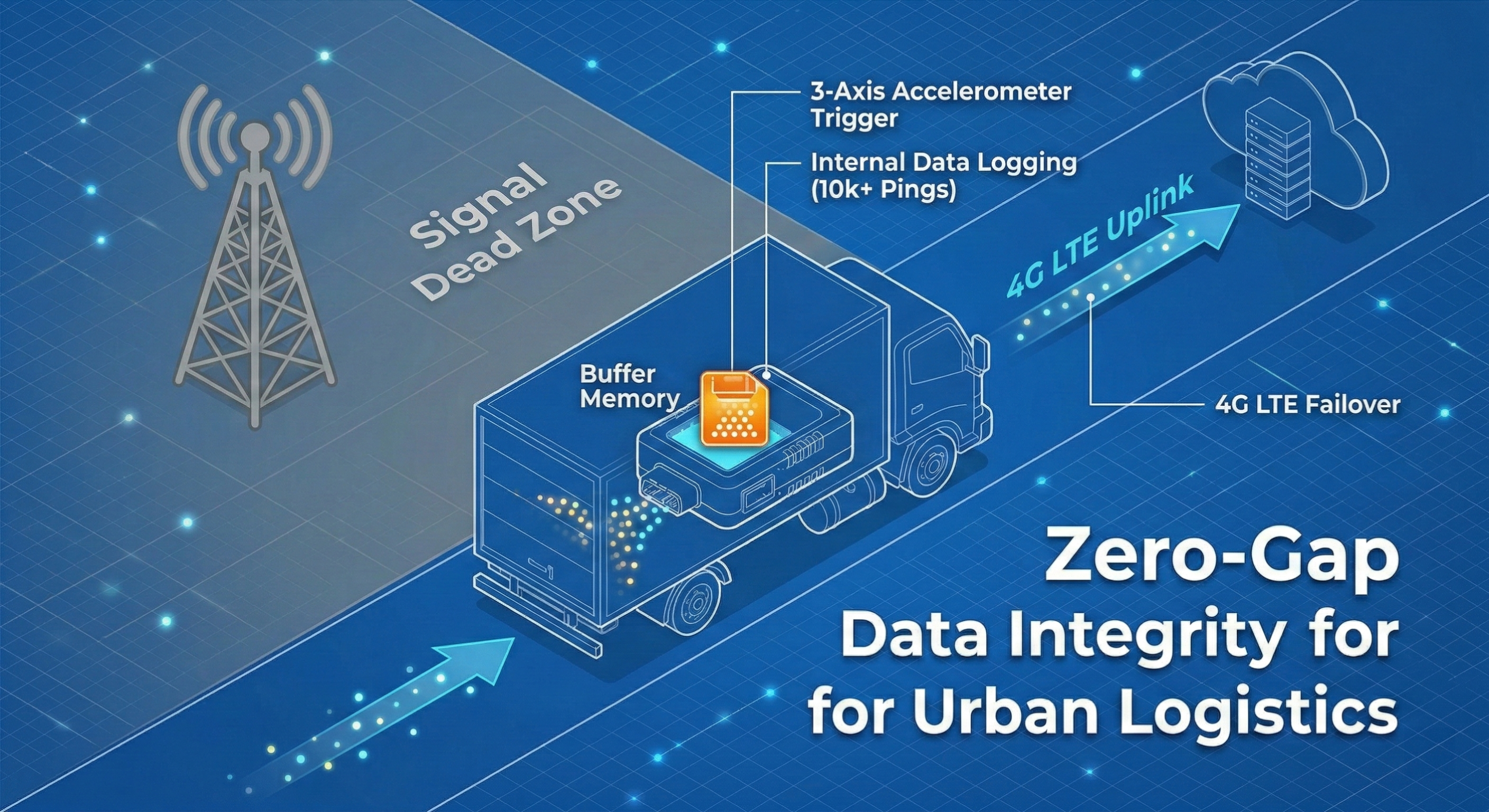
If your fleet operates in areas with poor cellular coverage, you need devices with internal memory. These units store the GPS coordinates when the signal drops and “dump” the data once they reconnect. This ensures your multi-stop history is complete. If you use a “live only” device without storage, those gaps in the map will haunt your reporting.
We also prioritize 4G LTE connectivity. As 2G and 3G networks continue to sunset, older hardware is becoming obsolete. Investing in 4G or 5G capable trackers is a prerequisite for any business looking to stay operational through the next decade. It is a technical tradeoff where higher upfront costs prevent a total system failure later.
Security and Asset Recovery
Multi-stop operations often involve high-value cargo sitting in a van that is frequently left unattended. While the driver is inside a building making a delivery, the vehicle is a target. Motion alerts and geofencing are the first line of defense. If the van moves without the engine being started, or if it leaves a designated route, the system triggers an immediate SOS.
This is the reality of the business. You are not just tracking a truck: you are protecting the inventory that keeps your clients happy. A lost van is a catastrophic event for a small logistics firm. Real-time tracking turns a potential theft into a quick recovery.
Frequently Asked Questions About Logistics Tracking
How does high-frequency pinging affect the data plan?
Frequent updates require more data transmission. Most GPS tracking uses optimized cellular protocols to keep these costs low. A device pinging every thirty seconds uses more data than one pinging hourly, but the overhead is negligible compared to the fuel savings. We offer tiered data plans that match your specific reporting needs so you never pay for more bandwidth than you actually use.
Can these trackers integrate with my existing dispatch software?
Yes. We design our hardware with open API capabilities. This means the location data can flow directly into the routing or management software you already use.
This eliminates the need to toggle between different screens during a busy shift. Consistency in data helps your dispatchers make faster calls when a route needs to change.
What happens if a vehicle enters a tunnel or a dense urban canyon?
GPS signals can struggle when the devices can’t “see” the sky. Our high-quality GPS tracking uses AGPS and LBS positioning to maintain a location lock. If you lose the signal entirely, the device stores the coordinates in its internal memory. Once the vehicle clears the obstruction, the tracker uploads the saved data to fill in the gaps on your map.
Are the portable units waterproof for external asset tracking?
We actually recommend specialized housings for extreme conditions. For trailers or containers that sit in the rain for weeks, we provide IP67 rated enclosures. These protect the delicate sensors and battery from moisture and dust. Choosing the right casing is just as important as choosing the right battery size for long-term field durability.
How We Support Your Fleet Goals
At Tracking the World, we do not just sell boxes. We provide the technical backbone for your entire mobile operation. Our software platform integrates with the hardware to give you a single pane of glass for your fleet. You can see the battery health, the signal strength, and the precise location of every asset on one screen.
We know the trade.
You need gear that works every time. This is regardless of the weather or the terrain. We ground our technical support team in the facts of the industry.
Stop letting your fleet operate in the dark. If you want to see exactly where your efficiency is leaking, it is time to upgrade your tech. We build our solutions for the heavy lifting of modern logistics. We help you turn data into a competitive advantage.
You can maximize your fleet’s potential and cut down on wasted miles today.
Do this by calling us at 650-692-8100 or reach out through our contact page to discuss the right hardware for your multi-stop needs. We are ready to help you get your operations back on track with precision.