
GPS Tracking for Logistics Companies: Improve Visibility and Control
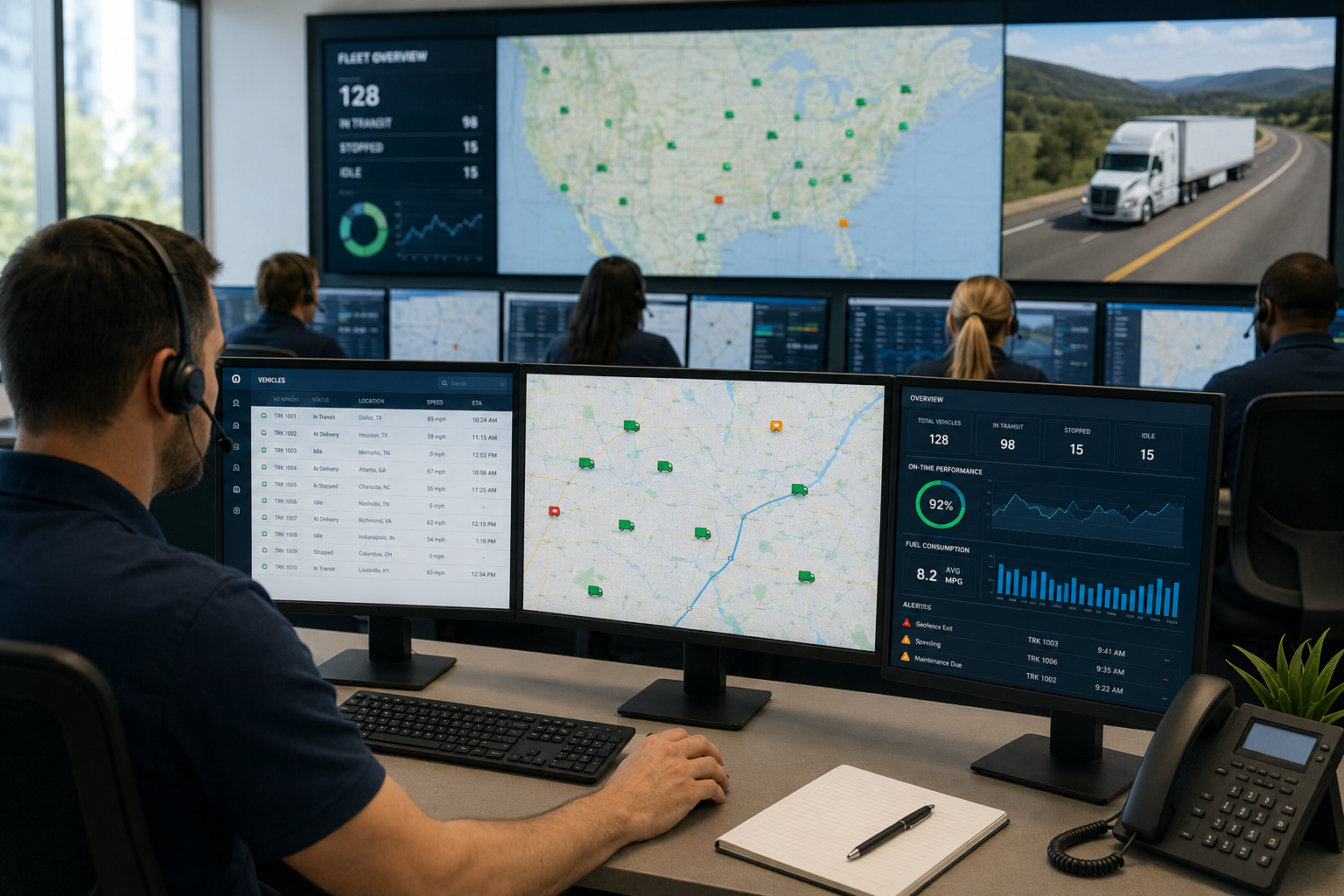
GPS tracking for logistics companies is extremely important. This is because logistics companies run on timing. A late pickup, a missed delivery window, or a vehicle that goes dark somewhere on the route can throw off an entire day of scheduling. GPS tracking for logistics companies gives dispatchers a live picture of where every vehicle is, how it’s running, and whether anything needs attention before it turns into a bigger problem.
| Without GPS Tracking | With GPS Tracking |
| Dispatchers guess at vehicle location and ETAs | Real-time location data for every vehicle on an interactive map |
| Maintenance problems surface after a breakdown | Automated reminders based on mileage, engine hours, or date |
| Vehicle theft often isn’t caught until it’s too late | Geofence alerts and tow detection flag movement immediately |
| Driver behavior is hard to document or coach | Dashcam footage and event data support safety conversations |
What Does GPS Tracking Do for a Logistics Company?
GPS tracking gives a logistics company a real-time view of its entire fleet. This means from where each vehicle is right now to how it’s performing on the road. Dispatchers can watch vehicles move across an interactive map. They can even check speed and estimated arrival times. They can also see details like fuel consumption or distance traveled without calling the driver. For a company managing trucks, trailers, or other equipment across multiple routes, that visibility turns a lot of guesswork into a few clicks.
How Does Real-Time Visibility Change Day-to-Day Dispatching?
Real-time visibility means dispatchers can respond to what’s actually happening instead of waiting for a phone call. Instant alerts flag delays or unusual stops as they occur. This means a dispatcher can reroute a driver or update a customer before a small delay becomes a bigger one. This proactive approach significantly boosts operational efficiency by reducing idle time and optimizing route adjustments on the fly. Furthermore, providing customers with precise, live updates on their shipments builds trust and enhances overall satisfaction. And this ensures that the logistics chain remains transparent and reliable even when unexpected challenges arise during transit. Real-time visibility means that you can:
- See the exact location of any vehicle at any time
- Check speed and estimated arrival for a delivery in progress
- Get instant alerts when something needs attention
- Communicate accurate updates to customers waiting on freight
Can GPS Tracking Help Reduce Vehicle Downtime?
Yes. Unexpected downtime is one of the more expensive problems a logistics company can face, and GPS tracking for logistics companies helps catch mechanical issues before they force a vehicle off the road. Weekly or daily reports on vehicle faults let a fleet manager address small issues early, and maintenance reminders based on odometer readings, engine hours, or set date ranges keep oil changes, inspections, and license renewals from slipping through the cracks. Comprehensive reporting also helps a fleet manager spot patterns across the whole operation, which often points to cost savings that would be easy to miss vehicle by vehicle.
Does GPS Tracking Help Protect Vehicles from Theft?
It does. GPS tracking for logistics companies includes features built specifically for that purpose. Geofence alerts notify a fleet manager the moment a vehicle enters or leaves a set area. And tow detection can flag movement even when the ignition is off. This is often how a theft is first noticed.
For a logistics company with vehicles parked overnight at yards or job sites, that kind of alert can be the difference between recovering a vehicle quickly and losing it entirely. Dashcams add another layer of protection, recording driving events like sudden braking or hard turns and uploading footage automatically.
This also helps document what happened in the event of an incident on the road.
Is GPS Tracking Connected to ELD Compliance?
For many fleets, yes. Electronic logging devices track hours of service, and a GPS platform that integrates ELD functionality can handle that reporting alongside location tracking and vehicle diagnostics in one place. That combination means a fleet manager isn’t juggling separate systems for compliance and day-to-day tracking. This even makes it easier to demonstrate that hours-of-service rules are being followed without extra manual paperwork.
GPS tracking for logistics companies comes down to knowing what’s happening across a fleet without having to guess. Real-time location, maintenance alerts, theft protection, and ELD support work together so a fleet manager can spend less time chasing down information and more time keeping freight moving on schedule.
Frequently Asked Questions
What can GPS tracking tell a dispatcher about a delivery in progress?
A GPS platform shows a vehicle’s exact location on an interactive map along with its current speed and estimated arrival time. A dispatcher can check on a delivery at any point without contacting the driver directly.
This makes it easier to keep customers updated with accurate information.
How does GPS tracking help with fleet maintenance?
Fleet tracking platforms can send weekly or daily reports on vehicle faults. And they can issue reminders based on odometer readings, engine hours, or date ranges. That means oil changes, inspections, and other routine maintenance get scheduled proactively (instead of after something breaks down).
Can GPS tracking prevent vehicle theft?
GPS tracking includes geofence alerts and tow detection. This notifies a fleet manager when a vehicle moves outside a set area or is moved without the ignition on. Catching that movement quickly gives a much better chance of recovering a vehicle than finding out after the fact.
Does GPS tracking work with electronic logging devices for ELD compliance?
Yes. A fleet tracking platform can integrate ELD functionality to monitor hours of service and generate automated reporting. Thus compliance tracking lives in the same system as location and vehicle data instead of a separate tool.
Tracking The World has specialized in GPS tracking since 2003 from its office in Burlingame, California. To learn more about fleet tracking solutions for your logistics company, visit trackingtheworld.com/fleet, or reach the team directly at 650-692-8100 or info@trackingtheworld.com.


