

Choosing a Commercial Fleet GPS Tracking System That Scales

Most fleets do not start out big. A company adds a few trucks. It tracks them with a basic app. Then it moves on. But trouble starts later, once the fleet outgrows that basic app. So choosing the right commercial fleet GPS tracking system from the beginning matters. It saves you from ripping out and replacing your setup down the road. At Tracking The World, we specialize exclusively in GPS tracking. We have done this since 2003. Our fleet platform manages a handful of vehicles or a few hundred, without forcing you to switch tools as you grow.
| The Problem | The Solution |
|---|---|
| Vehicle tracking works, but trailers, equipment, and drivers stay invisible. | One platform covering vehicles, trailers, towing, cold storage, dash cams, and more. |
| A system sized for 10 vehicles breaks down at 100. | Fleet tools built to manage a handful of vehicles or an entire fleet from one dashboard. |
| Reports arrive too late to change a route or catch an issue. | Real-time location data and alerts as conditions change. |
| Compliance tracking lives in a separate system, or nowhere. | Electronic logging device options built into the same fleet platform. |
Why does fleet size matter when picking a GPS system?
A system that fits your fleet today may not fit it in two years. So the platform’s ceiling matters as much as its starting price. Many entry-level GPS tools rely on a simple map view built for a handful of vehicles. That works fine at first. But once a fleet adds routes, drivers, and vehicle types, those tools tend to slow down. Often, they force a switch to something else entirely.
A commercial fleet GPS tracking system built for scale handles that growth without a disruptive changeover. Our platform manages fleets of any size, from a single vehicle to a large, multi-location operation. You run it all from the same dashboard.
What should a fleet tracking system actually cover?
A fleet is rarely just trucks. It often includes trailers, specialty vehicles, and equipment that need their own kind of oversight. So a tracking system should grow into all of it. For that reason, Tracking The World’s fleet solutions span several categories built for different parts of a fleet operation:
- Vehicle tracking for cars, trucks, and general fleet assets
- Trailer tracking for equipment that moves independently of a powered vehicle
- Towing solutions for repossession and recovery operations
- Cold storage temperature monitoring for refrigerated loads
- School bus and student monitoring
- RFID waste container tracking
- Dual dash cam tracking for driver and road-facing video
- Electronic Logging Device (ELD) compliance solutions
- Ambulance management tracking
With these options under one provider, a fleet manager avoids stitching together separate logins and separate vendors as needs change.
How does real-time tracking change day-to-day fleet management?
Real-time visibility lets a fleet manager act while a situation is still unfolding, not after the fact. For instance, a dispatcher who sees where every vehicle is right now can reroute around traffic. They can confirm a delivery window. They can respond quickly if a vehicle strays from its expected path.
Day-to-day, that visibility shows up in a few concrete ways:
- Faster response when a vehicle is delayed or off-route
- More accurate ETAs for customers and dispatch
- A clear location history if a dispute or incident needs review
- Less guesswork when planning routes and driver assignments
What role does compliance play in choosing a fleet system?
Compliance tools save a fleet manager from running logging and tracking as two separate systems. Tracking the World includes Electronic Logging Devices in its fleet lineup, alongside vehicle and trailer tracking. That means hours-of-service data and location data live in the same platform. You skip the separate login and the separate vendor relationship.
This matters most for growing fleets. As a company adds drivers and vehicles, keeping compliance and tracking together in one commercial fleet GPS tracking system keeps the administrative side from becoming its own full-time job.
What questions should you ask before committing to a provider?
The right questions before you sign on tell you more about a provider’s fit than any features list. Ask these of any fleet GPS provider:
- Can the platform manage both a small starting fleet and a much larger one later, without switching tools?
- Does it cover the specific vehicle and asset types in your fleet, including trailers or specialty equipment?
- Is compliance tracking, such as ELD, built into the same system as location tracking?
- How experienced is the provider, and how long have they specialized in GPS tracking specifically?
Tracking the World has answered that last question the same way since 2003. GPS tracking is the only thing we do. Our team, led by CEO Henri Maramis, built the company’s software and hardware around that focus.
Frequently Asked Questions
What size fleet is Tracking the World’s system built for?
It manages fleets of any size, from a single vehicle to a large, multi-location operation, all from one dashboard. That range lets a growing fleet stay on the same platform instead of switching providers as it scales.
Does the platform track more than just vehicles?
Yes. Beyond standard vehicle tracking, Tracking the World offers trailer tracking, towing solutions, cold storage temperature monitoring, school bus and student monitoring, waste container tracking, dash cam tracking, and ambulance management.
Is compliance tracking included?
Yes. Electronic Logging Device (ELD) compliance solutions are part of the fleet lineup. So you manage hours-of-service and location data within the same platform, instead of through a separate system.
How long has Tracking the World been in the GPS tracking business?
Tracking the World was founded in 2003 and has specialized exclusively in GPS tracking ever since. The company operates out of its corporate office in California and serves customers around the world.
A commercial fleet GPS tracking system should fit the fleet you have now and the one you are building toward. So, to see how Tracking the World’s fleet solutions can work for your operation, contact our sales team or call us directly at (650) 692-8100. Our office is located at 2360 East Bidwell Street, Suite 111, Folsom, CA 95630. You can also reach us by email at sales@trackingtheworld.com.

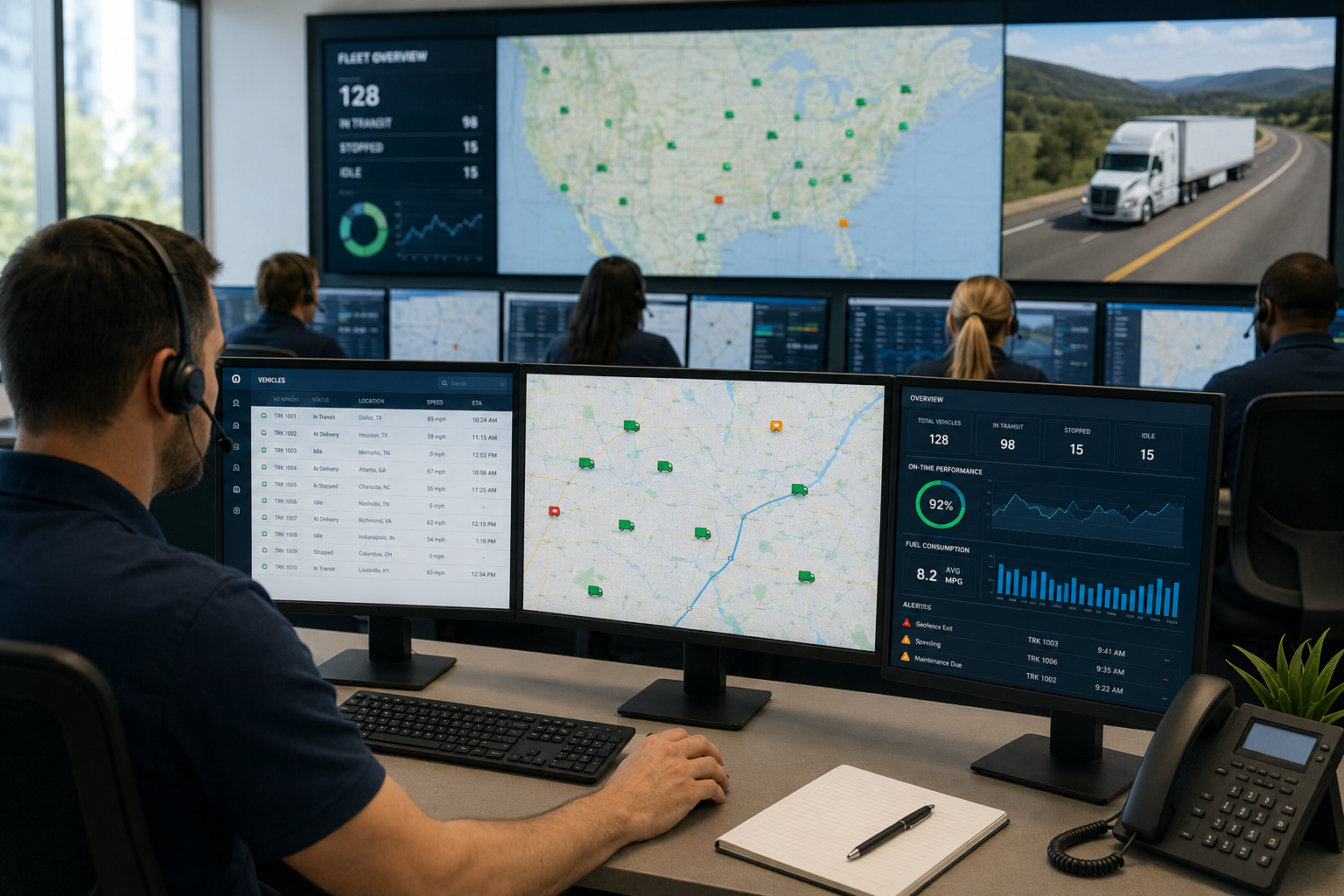
GPS Tracking for Logistics Companies: Improve Visibility and Control
GPS tracking for logistics companies is extremely important. This is because logistics companies run on timing. A late pickup, a missed delivery window, or a vehicle that goes dark somewhere on the route can throw off an entire day of scheduling. GPS tracking for logistics companies gives dispatchers a live picture of where every vehicle is, how it’s running, and whether anything needs attention before it turns into a bigger problem.
| Without GPS Tracking | With GPS Tracking |
| Dispatchers guess at vehicle location and ETAs | Real-time location data for every vehicle on an interactive map |
| Maintenance problems surface after a breakdown | Automated reminders based on mileage, engine hours, or date |
| Vehicle theft often isn’t caught until it’s too late | Geofence alerts and tow detection flag movement immediately |
| Driver behavior is hard to document or coach | Dashcam footage and event data support safety conversations |
What Does GPS Tracking Do for a Logistics Company?
GPS tracking gives a logistics company a real-time view of its entire fleet. This means from where each vehicle is right now to how it’s performing on the road. Dispatchers can watch vehicles move across an interactive map. They can even check speed and estimated arrival times. They can also see details like fuel consumption or distance traveled without calling the driver. For a company managing trucks, trailers, or other equipment across multiple routes, that visibility turns a lot of guesswork into a few clicks.
How Does Real-Time Visibility Change Day-to-Day Dispatching?
Real-time visibility means dispatchers can respond to what’s actually happening instead of waiting for a phone call. Instant alerts flag delays or unusual stops as they occur. This means a dispatcher can reroute a driver or update a customer before a small delay becomes a bigger one. This proactive approach significantly boosts operational efficiency by reducing idle time and optimizing route adjustments on the fly. Furthermore, providing customers with precise, live updates on their shipments builds trust and enhances overall satisfaction. And this ensures that the logistics chain remains transparent and reliable even when unexpected challenges arise during transit. Real-time visibility means that you can:
- See the exact location of any vehicle at any time
- Check speed and estimated arrival for a delivery in progress
- Get instant alerts when something needs attention
- Communicate accurate updates to customers waiting on freight
Can GPS Tracking Help Reduce Vehicle Downtime?
Yes. Unexpected downtime is one of the more expensive problems a logistics company can face, and GPS tracking for logistics companies helps catch mechanical issues before they force a vehicle off the road. Weekly or daily reports on vehicle faults let a fleet manager address small issues early, and maintenance reminders based on odometer readings, engine hours, or set date ranges keep oil changes, inspections, and license renewals from slipping through the cracks. Comprehensive reporting also helps a fleet manager spot patterns across the whole operation, which often points to cost savings that would be easy to miss vehicle by vehicle.
Does GPS Tracking Help Protect Vehicles from Theft?
It does. GPS tracking for logistics companies includes features built specifically for that purpose. Geofence alerts notify a fleet manager the moment a vehicle enters or leaves a set area. And tow detection can flag movement even when the ignition is off. This is often how a theft is first noticed.
For a logistics company with vehicles parked overnight at yards or job sites, that kind of alert can be the difference between recovering a vehicle quickly and losing it entirely. Dashcams add another layer of protection, recording driving events like sudden braking or hard turns and uploading footage automatically.
This also helps document what happened in the event of an incident on the road.
Is GPS Tracking Connected to ELD Compliance?
For many fleets, yes. Electronic logging devices track hours of service, and a GPS platform that integrates ELD functionality can handle that reporting alongside location tracking and vehicle diagnostics in one place. That combination means a fleet manager isn’t juggling separate systems for compliance and day-to-day tracking. This even makes it easier to demonstrate that hours-of-service rules are being followed without extra manual paperwork.
GPS tracking for logistics companies comes down to knowing what’s happening across a fleet without having to guess. Real-time location, maintenance alerts, theft protection, and ELD support work together so a fleet manager can spend less time chasing down information and more time keeping freight moving on schedule.
Frequently Asked Questions
What can GPS tracking tell a dispatcher about a delivery in progress?
A GPS platform shows a vehicle’s exact location on an interactive map along with its current speed and estimated arrival time. A dispatcher can check on a delivery at any point without contacting the driver directly.
This makes it easier to keep customers updated with accurate information.
How does GPS tracking help with fleet maintenance?
Fleet tracking platforms can send weekly or daily reports on vehicle faults. And they can issue reminders based on odometer readings, engine hours, or date ranges. That means oil changes, inspections, and other routine maintenance get scheduled proactively (instead of after something breaks down).
Can GPS tracking prevent vehicle theft?
GPS tracking includes geofence alerts and tow detection. This notifies a fleet manager when a vehicle moves outside a set area or is moved without the ignition on. Catching that movement quickly gives a much better chance of recovering a vehicle than finding out after the fact.
Does GPS tracking work with electronic logging devices for ELD compliance?
Yes. A fleet tracking platform can integrate ELD functionality to monitor hours of service and generate automated reporting. Thus compliance tracking lives in the same system as location and vehicle data instead of a separate tool.
Tracking The World has specialized in GPS tracking since 2003 from its office in Burlingame, California. To learn more about fleet tracking solutions for your logistics company, visit trackingtheworld.com/fleet, or reach the team directly at 650-692-8100 or info@trackingtheworld.com.
.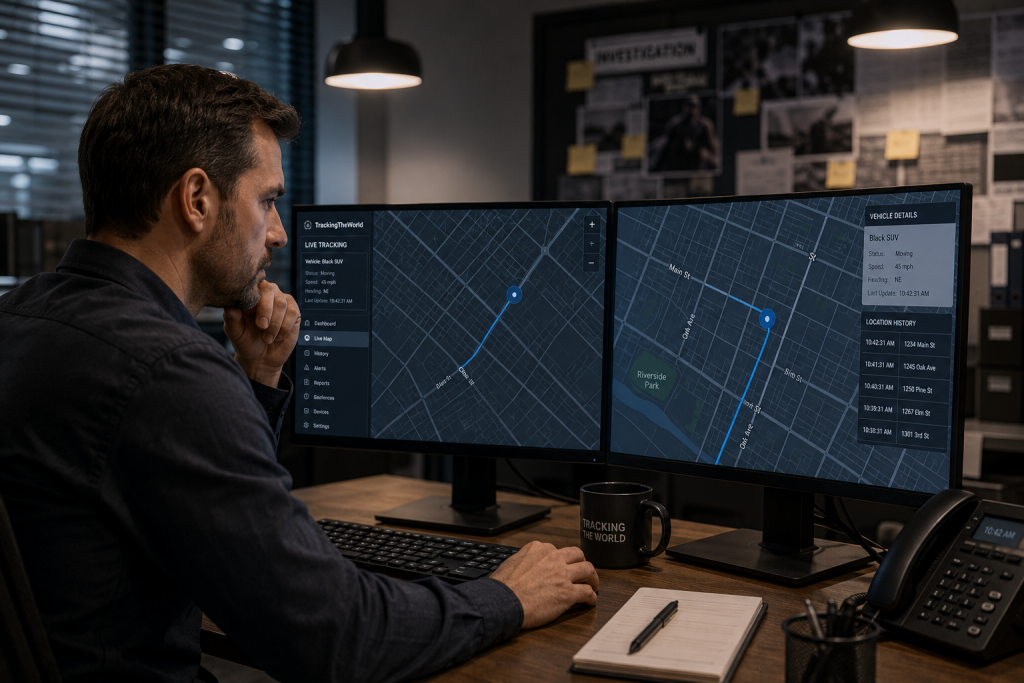
When a case depends on knowing where a vehicle is at that exact moment, tracking that arrives late or gets overlooked is worse than no tracking at all. That is where real-time covert vehicle tracking proves its worth, giving investigators, security teams, and fleet managers a live view of where a vehicle is and where it has been, while the device itself stays out of sight. Since 2003, we have built GPS tracking for law enforcement, government, private industry, and personal protection, and our vehicle devices are made for this kind of work.
| The Challenge | With TrackingTheWorld |
|---|---|
| Location updates arrive too late to act on. | Compact real-time trackers report a vehicle’s live position on a map. |
| A device that is easy to spot gets found and removed. | Small housings with hardwired, OBD, or battery options support discreet placement. |
| One vehicle, one narrow tracking need. | A full vehicle lineup covering cars, fleets, farm, mining, rental, and more. |
| No record of where a vehicle has been. | Location history and alerts through our GPS tracking software. |
Why Does Covert Vehicle Tracking Matter for Investigations?
The moment a tracker is noticed, its value drops to almost nothing. Keeping a device discreet lets you follow a vehicle’s movements without changing anyone’s behavior, which is the whole point of sensitive work. That is why real-time covert vehicle tracking fits situations where being seen would put the outcome at risk, such as:
- Protecting fleet and company vehicles from theft or misuse
- Recovering a vehicle after it goes missing
- Keeping watch on rental, lease, or high-value vehicles
- Supporting law enforcement, government, and private security operations
Each of these depends on accurate locations you can trust, delivered the moment you need it, not hours after the fact.
How Does Real-Time Vehicle Tracking Actually Work?
A tracker fixes its position using GPS satellites, then sends that location over a cellular network to our software, where it updates on a live map as the vehicle moves. Instead of reading a report long after the fact, you watch the vehicle in near-real-time and can look back over the exact route it took. Our platform is built to turn raw location data into something you can act on, including:
- Live position on a map that refreshes as the vehicle drives
- Location history so you can retrace where a vehicle has been
- Alerts you can set up around movement and other activity
You can even see a live tracking demo on our site before you commit to a device, so you know what the view looks like in practice.
Which TrackingTheWorld Devices Support Covert Vehicle Tracking?
We build a full range of vehicle trackers, so the right one depends on how you will install it and power it. Getting real-time covert vehicle tracking right starts with matching the hardware to the vehicle and the job. Our vehicle options fall into a few groups:
- OBD trackers such as the WT-OBD and WT-OBD 4G plug straight into the vehicle’s OBD port for a fast install, and the full WT-OBD 4G version can also read diagnostic codes.
- Hardwired trackers such as the AVL-50 4G, AVL-55, and AVL-300 series install inside the vehicle and offer multiple input and output options, with some supporting external GPS antennas, Garmin FMI, sensors, and voice.
- The multi-purpose Enduro Plus 4G covers vehicle use alongside personal and asset tracking, which helps when running wires is not practical.
Across the lineup, models differ by network (4G LTE, 3G, CDMA, or GSM/GPRS), install type, size, and certifications such as FCC and Verizon, so there is room to fit the device to the situation.
What Should You Look for in a Covert Tracking Setup?
Start with the vehicle, the power source, and how you plan to use the location data. The strongest setup pairs a device that installs cleanly and stays hidden with software that shows live location the instant you need it. For any team that leans on real-time covert vehicle tracking, a few questions guide the choice:
- How will your device be powered: hardwired, through the OBD port, or by battery?
- How quickly does it need to go in and come back out?
- Which cellular network has the best coverage where the vehicle travels?
- What do you need from the software: a live map, history, alerts, or all three?
Answer those, and the right device choice usually becomes clear. If you are not sure, our team can help you match a model to the situation.
Frequently Asked Questions
Is covert vehicle tracking legal?
It depends on your state and how your vehicle is used. As a general rule, you need to own the vehicle or have the proper authority to track it, and the rules are stricter for certain uses. Confirm what applies to your situation, and for law enforcement or investigative work, follow the required legal process.
How does a covert tracker stay out of sight?
We feature vehicle trackers that use compact housings. And you can hardwire them, or plug them into your OBD port, or even run them on battery power. This gives you several ways to place a device where it will not be noticed. The right option depends on the vehicle and how long the device needs to stay installed.
Can I track more than one vehicle at once?
Yes. We build our GPS tracking software to monitor multiple devices from one place, which is why it works well for fleets as well as single vehicles. You can view each vehicle’s live location and history in the same platform.
What cellular networks do your vehicle trackers use?
Depending on the model, our devices run on 4G LTE, 3G, CDMA, or GSM/GPRS. Coverage varies by area, so it is worth confirming which network fits your region before you choose, and our team can point you to the right device.
Talk to TrackingTheWorld
Ready to put real-time tracking to work without giving it away? Talk with our team about which vehicle device fits your investigation, fleet, or security needs. Call (650) 692-8100, email sales@trackingtheworld.com, or reach us through our contact page. We are located at 2360 East Bidwell Street, Suite 111, Folsom, CA 95630.
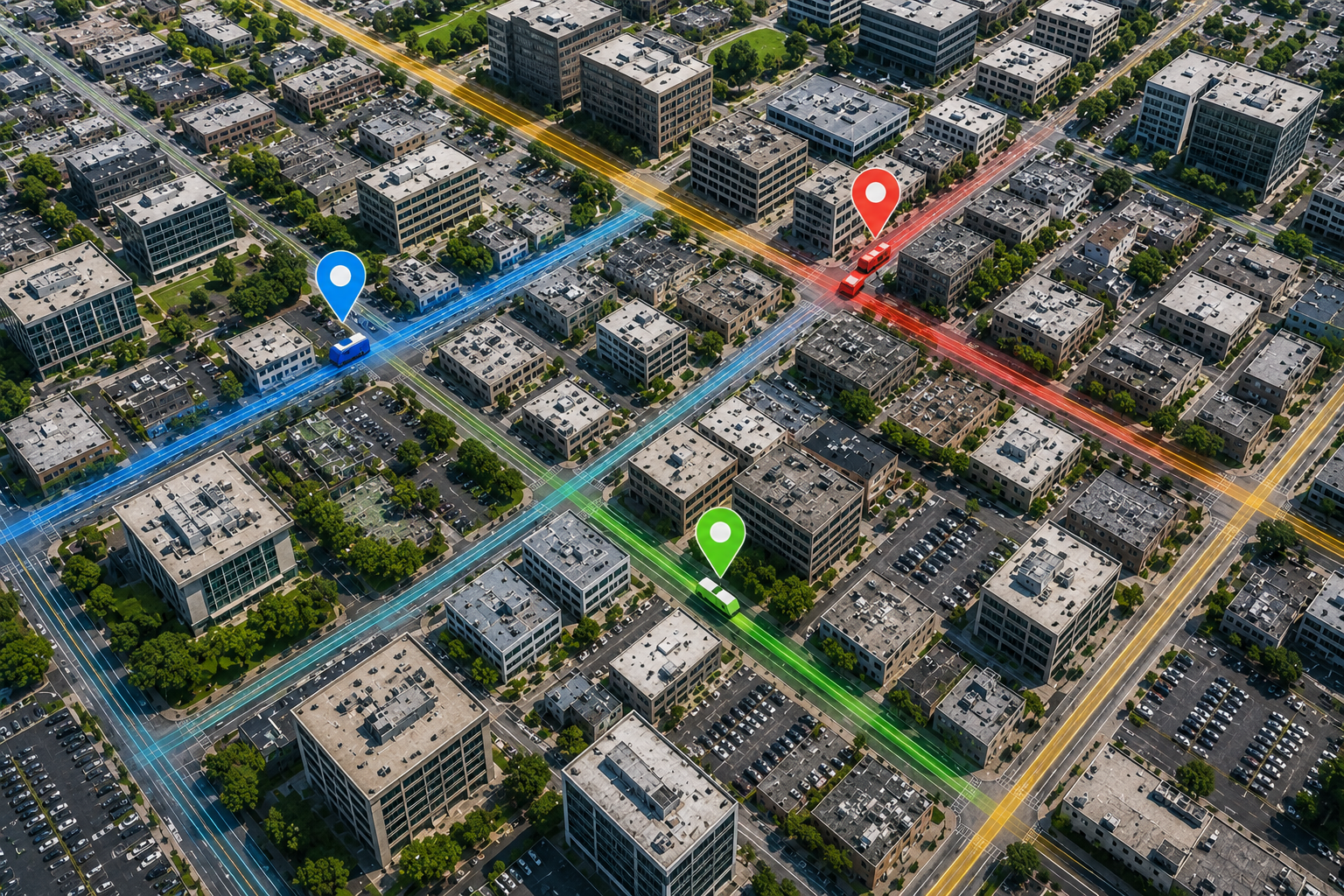
 Law Enforcement GPS Trackers for Safer Field Operations
Managing active tactical operations involves intense logistical friction. Commanders must coordinate multiple moving units, track suspect movements, and maintain absolute communication safety across unpredictable municipal borders. One miscalculated intersection during a vehicle pursuit can compromise an entire multi-agency investigation.
Field safety cannot rely on spotty radio transmissions or verbal updates. Police operations require an objective, cloud-based data layer to confirm exact asset positions instantly. Utilizing modern satellite technology converts blind tactical guesses into highly structured, visible operations that maximize officer safety during high-stress deployments.
| Tracking Deployment Type | Primary Operational Challenge | Recommended Hardware Configuration |
| Covert Vehicle Surveillance | Remote power depletion and physical detachment | Hardwired tracking with backup battery and magnetic housing |
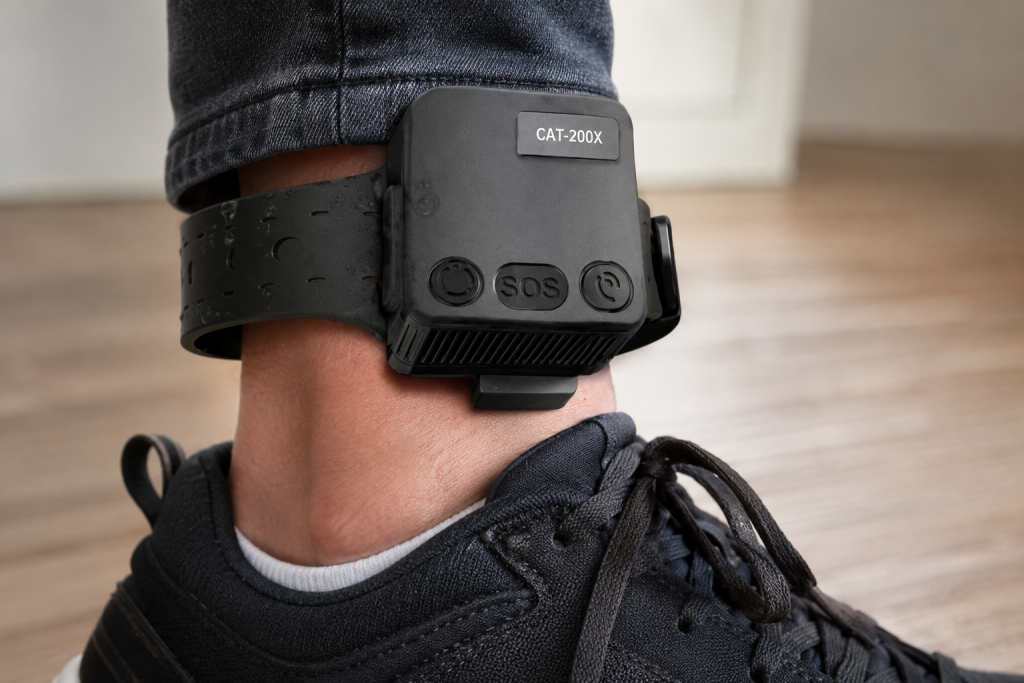
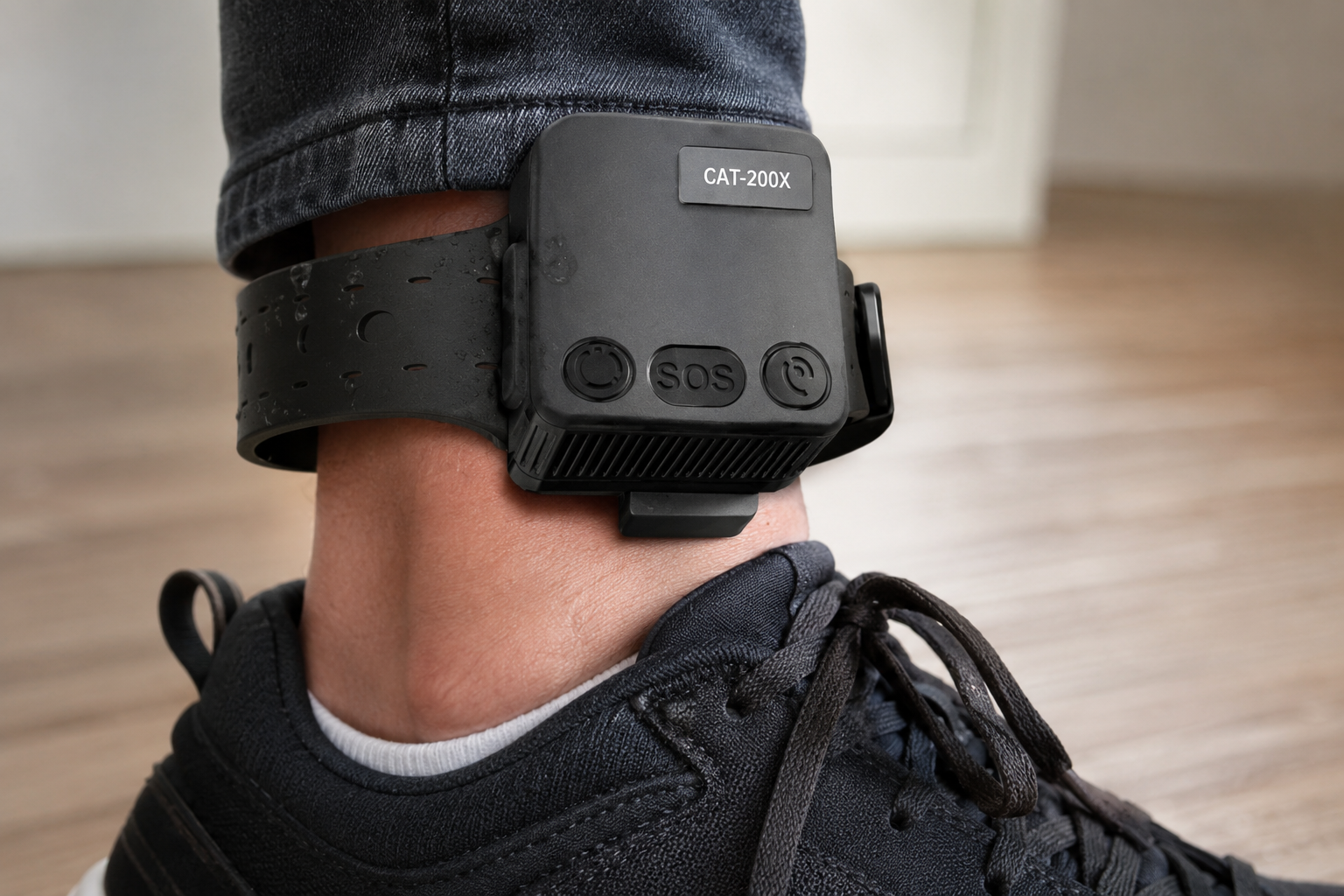
| Off-Site Suspect Monitoring | Signal jamming or unauthorized removal attempts | Waterproof ankle trackers with integrated belt-off security alarms |
Why Are Terrestrial Communications Insufficient for Police Operations?
Cellular communications fail during critical operations because consumer networks drop coverage in rural dead zones and congested urban centers. Dedicated hardware communicates directly with global satellite constellations, logging internal telemetry paths even when local mobile networks drop completely out of service during crisis situations.
Consumer cell phones perform adequately for standard urban communication, but they fail as emergency tactical lifelines. Active data tracking over standard cellular networks drains phone batteries within hours, leaving field agents isolated. Furthermore, typical commercial tracking apps do not offer the rugged enclosure ratings necessary to survive heavy rain, impact, or foot pursuits. When agencies select high-performance law enforcement GPS trackers from certified distributors, they gain situational awareness that transforms active pursuit operations.
Relying on terrestrial towers presents extreme risks during multi-jurisdictional investigations. If a target moves past a major ridge line or enters a subterranean parking garage, standard cellular pings vanish completely. Professional tracking setups rely on advanced satellite positioning systems like assisted GPS to maintain precise data streams across hostile terrain. This continuous stream provides commanders with the ground truth required to make rapid tactical decisions under pressure.
How Do Tactical Teams Deploy Covert Asset Trackers?
Tactical units deploy covert tracking hardware to follow high-value targets without initiating dangerous physical pursuits. These compact devices attach securely to suspect vehicles or high-risk cargo, transmitting location bursts via secure back-end servers to allow remote operators to monitor asset positions from any web browser.
Deploying modern law enforcement GPS trackers directly onto suspect vehicles eliminates the high-speed pursuit risks that endanger civilian lives. Specialized units use heavy-duty magnetic enclosures to place tracking hardware underneath target chassis in seconds. This allows undercover teams to maintain a safe distance while gathering continuous location intelligence.
Successful covert deployments depend on specific tactical methodologies to ensure long-term field success:
- Use motion-sensing power conservation protocols to ensure the device sleeps during extended stationary periods.
- Secure the tracker within an IP67 crushproof case to protect delicate internal components from road debris.
- Route private location data streams through multi-tenant cloud architectures to protect operational security.
- Deploy universal protocol hardware that integrates seamlessly with existing command center mapping applications.
By keeping physical tracking teams far out of sight, investigators reduce suspect suspicion. If a target believes they are unmonitored, they maintain standard behavioral patterns, leading teams directly to stash locations or accomplice hubs. This objective data trail provides prosecutors with undeniable timeline evidence when cases move to court.
What Hardware Features Protect Officers in High-Risk Zones?
High-risk tracking hardware protects field personnel by incorporating physical emergency alert buttons, high-frequency ping capabilities, and extended external battery architecture. These specific engineering attributes ensure that an officer can signal for immediate tactical assistance even if standard radio channels are jammed or compromised.
Commanders must balance hardware portability against operational lifespan when selecting field equipment. If a team enters a four-day tracking operation, a tool with a standard consumer battery will fail before the mission concludes. Many professional tracking setups allow agencies to connect heavy-duty external battery packs or tie devices directly into a vehicle electrical line for indefinite power.
Specialized law enforcement GPS trackers feature high-gain internal antennas capable of capturing satellite coordinates even when stuffed beneath heavy steel frames. This ensures continuous transmission when timing matters most.
Agencies optimize their tactical hardware arrays by evaluating these technical parameters:
- High-frequency polling adjustment that scales from thirty-second bursts during pursuits to hourly pings at camp.
- Integrated 3-axis accelerometers that instantly flag sudden impacts or unauthorized vehicle movement.
- Dual-antenna designs that automatically switch to the strongest available signal path in urban canyons.
- Dedicated SOS physical triggers that bypass standard menus to send immediate distress notifications to dispatchers.
Having immediate access to an automated distress trigger changes the safety dynamic for lone workers or undercover officers. If a meeting goes south, a single button press transmits exact coordinates to nearby backup units without requiring the officer to pull out a radio or look at a screen.
How Do Ankle Trackers Enhance Parole and Suspect Monitoring?
Bottom Line Up Front: Ankle tracking devices enhance suspect supervision by enforcing virtual geofences around restrictive zones. The underlying backend software continuously matches device coordinates against digital borders, firing automated text warnings to monitoring officers the exact second a subject crosses an authorized perimeter line.
Supervising individuals on conditional release requires absolute hardware reliability. Standard tracking protocols fail if a suspect can simply slip a device into a backpack and walk away. Professional ankle trackers utilize robust fiber-optic or steel-reinforced bands equipped with integrated belt-off alarms. If a subject attempts to cut or tamper with the strap, the device instantly transmits an emergency alert to the central office.
Deploying secure law enforcement GPS trackers into community supervision workflows protects public safety while minimizing administrative guesswork. Investigators use these automated perimeters to trace precise movements around victim residences, court boundaries, or high-crime municipal sectors. This digital perimeter guard operates twenty-four hours a day, keeping communities safer without requiring constant manual surveillance teams.
Frequently Asked Questions
Can commanders monitor field hardware from standard mobile devices?
Yes, modern asset tracking platforms provide full mobile compatibility via standard web browsers or dedicated applications. Command staff can view live positions, adjust active geofence shapes, and receive immediate distress text alerts directly on their personal phones while away from headquarters.
Do these tracking devices require a direct line of sight to function?
While an unobstructed view of the sky yields the highest possible precision, professional hardware utilizes advanced high-gain antennas and assisted GPS to maintain connection locks inside vehicles or under heavy tree canopy. If signals drop completely inside deep tunnels, internal memory chips store the coordinates until transmission returns.
How do tactical teams prevent moisture and dust damage during outdoor operations?
Teams utilize specialized heavy-duty waterproof housings or custom magnetic protective cases to shield internal circuits from extreme environmental exposure. These external accessories seal the tracking units against heavy rain, thick mud, and high-velocity road debris during extended field deployments.
Is it possible to use the same tracking platform for both vehicles and foot personnel?
Multi-purpose tracking hardware is engineered specifically to handle diverse operational parameters with complete flexibility. Operators can slip a compact portable tracker into a field agent’s gear pouch during a foot patrol, then connect that identical unit to a vehicle hardwire kit for asset tracking at night.
Secure Your Field Operations with Tracking the World
Managing complex group logistics in remote or high-risk environments does not have to be an unpredictable guessing game. Stop relying on weak cellular applications or irregular manual roll calls to keep your personnel safe. Reach out to the experienced technical team at Tracking the World to establish a highly reliable satellite safety infrastructure for your upcoming field operations. Explore our extensive array of professional-grade tracking systems or secure an engineered quote by calling our office directly at (650) 692-8100. You can also connect with our corporate technology specialists by emailing info@trackingtheworld.com to discover the exact hardware configuration tailored for your operational requirements.


Planning a group excursion involves massive logistical headaches. You have to coordinate bathroom breaks, manage transport schedules, and somehow keep an eye on energetic kids or wandering adults. One person lags behind to tie a shoe, and suddenly your whole group dynamic fractures. Utilizing GPS tracking for family trips and outdoor adventures allows trip coordinators and parents to monitor exact coordinates in real time.
Safety should not rely on a headcount every five minutes. Modern satellite hardware offers a far more reliable safety net than frantic shouting in crowded parks or dense forests. Investing in robust personal and vehicle GPS tracking for families converts chaotic supervision into a structured, highly visible operation.
| Excursion Type | Primary Tracking Risk | Ideal Hardware Feature | Recommended Hardware Setup |
| Family Road Trips | Vehicle breakdown in zero-cell zones | Hardwired OBD connection with internal backup power | Vehicle tracking with live map-sharing capabilities |
| Wilderness Hiking | Dense canopy blocking standard signals | High-sensitivity GPS modules with AGPS positioning | Compact portable trackers hidden securely in backpacks |
| School Field Trips | Rapidly moving children in crowds | Compact, lightweight multi-purpose portable trackers | Real-time geofencing and active text warning alerts |
Selecting the correct tracking system requires understanding your specific environment. A cheap smartphone application is completely useless the moment cellular towers vanish past the mountain ridge. Professional-grade family travel GPS tracking solutions rely on dedicated hardware built to survive impact, moisture, and prolonged battery drain.
Why Is Cellular Phone Tracking Insufficient for Wilderness Environments?
Bottom Line Up Front: Cellular phone tracking fails in deep wilderness because phones often rely on nearby terrestrial towers. Dedicated GPS trackers communicate directly with overhead satellite networks and store internal coordinates when connectivity drops, ensuring continuous history updates even in total dead zones.
Smartphones are magnificent tools for urban navigation, but they fail miserably as emergency lifelines. A phone actively scanning for weak cellular signals drains its internal battery within a few hours. Furthermore, phone screens crack easily during minor falls on rocky trails.
Dedicated satellite trackers operate on entirely different engineering principles. These units use optimized protocols that conserve energy by transmitting data in precise bursts. Many models feature power conservation triggers that put the device to sleep when no motion is detected, serving as indispensable GPS trackers for family travel safety.
Consider these distinct technical advantages of dedicated hardware:
- Ruggedized Enclosures: Professional devices feature high water-resistance ratings and drop-proof cases to survive heavy rain, thick mud, and deep puddles.
- Data Logging Memory: When dense tree canopies or canyon walls block all signals, internal memory chips save your historical breadcrumb trail until the sky clears.
- Long Standby Power: Internal battery architecture allows small portable units to operate reliably for days without needing a wall charger.
How Does Satellite Hardware Enhance School Field Trip Supervision?
Bottom Line Up Front: GPS hardware streamlines field trip supervision by establishing virtual boundaries around specific event spaces. Chaperones receive instant automated text messages if a student wanders outside the designated zone, enabling immediate intervention before a child becomes truly lost.
Amusement parks and crowded museums are absolute nightmares for school teachers. A class of thirty children can scatter in a dozen different directions in a matter of seconds. Relying on physical chaperones to watch every single exit point is a losing battle.
Placing a compact GPS tracker for kids’ hiking and field trips into a student’s backpack fundamentally changes the safety dynamic. Instructors can look at a single mobile dashboard to view the entire group spread across a property. This eliminates the panic of a mismatched headcount during transitions.
Our clients deploy tracking hardware during large-scale student excursions to manage these specific challenges:
- Managing Arrival Windows: Remote dispatchers track bus locations to give school administrators exact arrival updates.
- Optimizing Chaperone Placement: Managers see which areas of a park have the highest concentration of students.
- Streamlining Emergency Responses: If a medical emergency occurs, coordinators locate the nearest staff member instantly.
Implementing professional GPS tracking for family trips and outdoor adventures and dedicated GPS safety tracking for school field trips transforms how institutions approach child safety during off-site travel.
Dual-Layer Protection: Seamless Vehicle and Personal Tracking Integration
Comprehensive travel protection requires a combination of robust vehicle monitoring and portable personal hardware. By combining specialized devices, families can maintain total situational awareness whether they are driving on a remote highway or exploring on foot.
True safety requires an ecosystem that covers both the journey and the destination. Rather than relying on a single piece of hardware to do everything, deploying specialized tools ensures that your real-time GPS tracking for family adventures functions flawlessly across all terrains.
Dedicated Highway Asset Security: The GV53MG
Your safety network begins the moment you back out of the driveway. Deploying a specialized vehicle GPS tracker for family vacations, such as the Tracking the World GV53MG, allows you to maintain constant tabs on your car, truck, or RV. The GV53MG hardwires seamlessly into your vehicle’s power supply, featuring an internal battery backup for continuous data transmission.
When you use the GV53MG to track the vehicle, extended family or friends back home can follow along by sharing the tracking map to see all the unique places visited. More importantly, this map sharing acts as an essential safety measure if something happens—such as an engine breakdown or an accident in an isolated location—ensuring emergency services know exactly where to dispatch assistance.
Portable Wilderness Tracking Protection: The GL320MG
The safety net shouldn’t vanish when you park the car. For on-foot excursions, the compact GL320MG portable tracker serves as your individual lifeline. This lightweight, highly rugged device is built to slip effortlessly into small pockets or gear pouches.
The GL320MG can be put inside a backpack when going hiking or backpacking, or carried along as you stroll around town, navigate crowded amusement parks, and explore busy city centers. This ensures that no matter how far your family wanders from the vehicle, their exact latitude and longitude remain visible on your private monitoring dashboard, creating premium, multi-layered family travel GPS tracking solutions.
What Features Matter Most When Choosing an Outdoor Tracker?
Outdoor trackers require exceptional battery life, rapid ping frequencies, and robust water resistance. Devices must also feature configurable alert triggers, such as geofencing boundaries and motion sensors, to keep coordinators informed without constant manual monitoring.
Do not buy a tracking device based solely on a low price tag. A tracker that stops working after a minor rainstorm is a liability, not an asset. Look for devices that offer universal protocol support and flexible mounting options to secure reliable GPS safety tracking for family adventures.
Battery capacity dictates your operational limits. If your family plans a four-day backpacking trip, a tracker with a tiny battery will die before you reach the second campsite. Many professional setups allow you to connect external battery packs or hardwire the system to a vehicle supply line.
Hardware must balance these critical technical attributes:
- Ping Frequency Control: Look for software that lets you adjust tracking intervals from every thirty seconds during active hiking to hourly when at camp.
- High-Gain Antennas: Internal antennas must be sensitive enough to capture satellite signals even from inside a backpack or glove box.
- Emergency Alert Integration: Devices should include a physical button that users can press to send an immediate distress notification.
How Do You Deploy Geofencing for Family Excursions?
Geofencing allows you to draw digital parameters around your campsite, hotel, or trail map. The tracking software monitors device locations against these digital borders and fires an automated text notification the instant a family member crosses the line.
Geofencing acts as an invisible, silent perimeter guard for your loved ones. If you are camping near a dangerous river, you can draw a custom boundary between your tents and the water line. You can sleep soundly knowing the software is monitoring the perimeter.
This feature is equally valuable for teenage drivers on family road trips. You can set alerts for excessive speed or unauthorized detours away from the main highway route. It creates a clear culture of accountability behind the wheel, solidifying effective GPS tracking for family trips and outdoor adventures.
Effective geofencing deployments utilize these best practices:
- Custom Boundary Shapes: Use polygonal borders to trace exact trail lines rather than simple standard circles.
- Time-Based Restrictions: Activate specific curfew triggers that alert you if a vehicle moves after midnight.
- Multi-User Notifications: Route critical alerts to multiple phones so someone always sees the warning immediately.
Using advanced hardware handles the hard work of group coordination, giving you complete control over your surroundings during intensive GPS tracking for family vacations and field trips.
Frequently Asked Questions
Can I monitor these tracking devices from my own smartphone?
Yes, modern tracking platforms offer full mobile compatibility. You can view live asset positions, edit geofence boundaries, and receive instant alert notifications directly through a standard web browser or dedicated app on your phone.
Do these devices require clear line-of-sight to the sky to function?
While a clear view of the sky provides the highest precision, high-quality hardware utilizes advanced positioning technologies to maintain locks. If a signal drops completely inside a thick building or tunnel, the device logs data internally until connectivity returns.
How do I ensure the tracker does not get damaged by bad weather?
You should select devices that feature heavy-duty waterproof housings, or place your portable trackers inside specialized protective cases. Accessories like custom magnet cases protect internal components from dust, rain, and mud.
Is it possible to use these systems to track both vehicles and individuals?
Multi-purpose trackers are designed specifically for this type of flexibility. You can slip a portable unit into a hiker’s pocket during the day, and then connect it to a vehicle power source for asset tracking at night.
Managing group logistics in remote areas does not have to be a guessing game. Stop relying on spotty cell service and unpredictable headcounts to keep your family or students safe. Reach out to the expert team at Tracking The World to build a reliable satellite safety net for your upcoming journeys. Explore our comprehensive selection of professional-grade hardware or secure a tailored quote by calling our office directly at (650) 692-8100. You can also connect with our tech team by emailing sales@trackingtheworld.com to discover the exact tracking configuration for your lifestyle. Let us help you convert data into complete peace of mind on every trail, highway, and field trip.
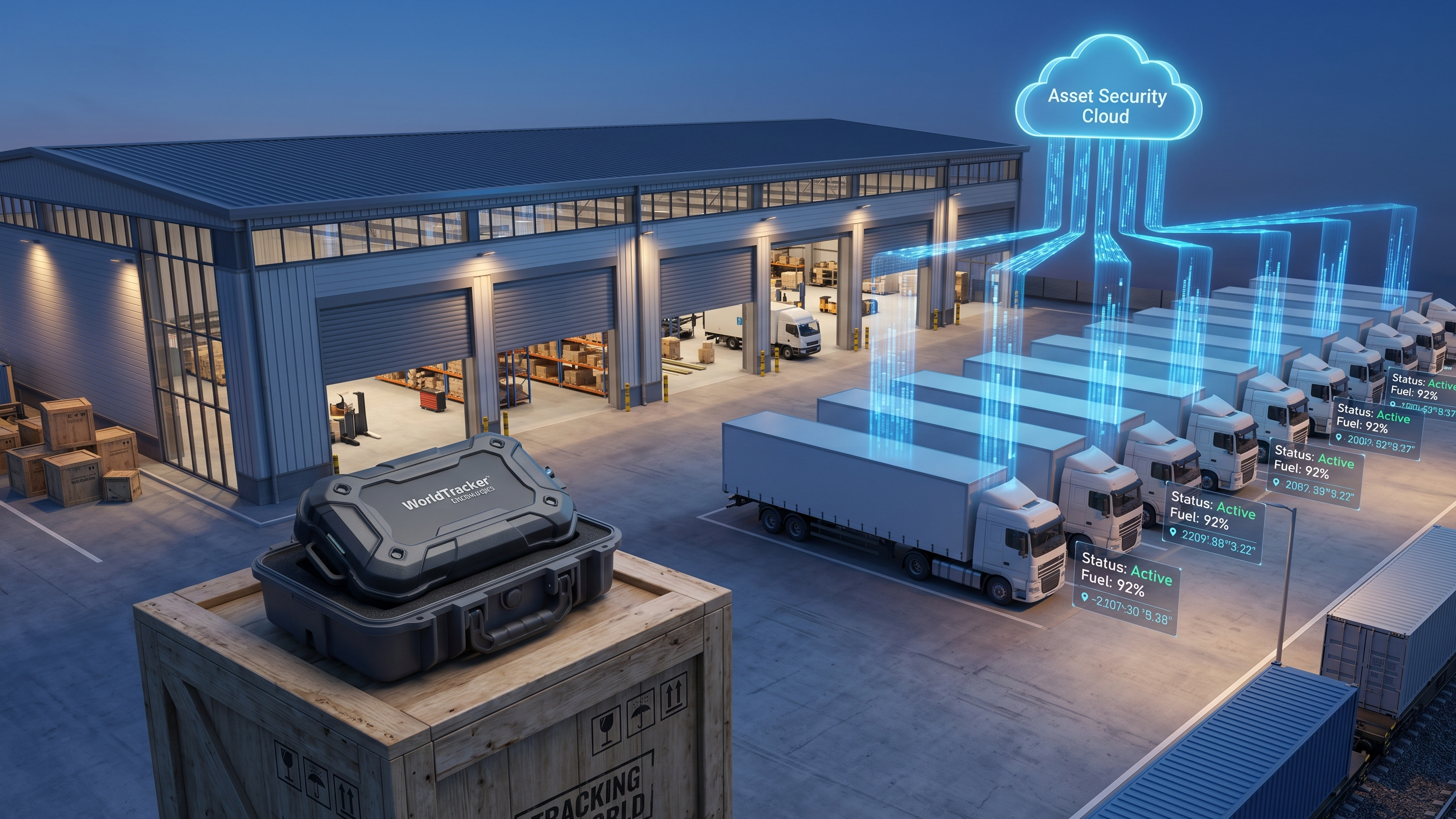
The global market for GPS hardware and telematics is projected to reach $4.52 billion in 2026 (Research Nester). And because of this market growth, there is now a massive opening for entrepreneurs. On the one hand, starting a tracking business from scratch requires immense capital for server infrastructure and software development. But using Tracking the World’s white label GPS tracking software allows you to bypass these hurdles.
You get a ready-to-use platform that carries your brand.
High-Velocity Market Entry for Resellers
White label GPS tracking software deployments utilize multi-tenant cloud architecture to provide branded portals for asset monitoring.
Features:
- Turn-key software deployments integrate with 500-plus hardware models through proprietary protocols.
- Resellers manage client accounts via centralized dashboards while maintaining custom domain mapping and unique CSS skins.
- High-frequency data polling and automated reporting allow you to manage your fleet in real-time.
| Category | Value | Results In: |
| Initial Setup Time | 30 to 60 Minutes | Rapid deployment of branded portals. |
| Asset Licensing Cost | $0.20 to $2.00 | Low monthly cost per active device (Industry Benchmark). |
| Market Growth Rate | 13.3% CAGR | Becoming part of a projected industry expansion through 2035 (Spherical Insights). |
| Hardware Support | 500+ Models | Compatibility with major manufacturers. |
Businesses today demand more than “dots on a map.” They need data regarding fuel consumption and driver safety.
Our Tracking the World white label GPS tracking software provides these analytics without the technical overhead. You focus on sales while we manage the backend stability and security.
Core Technical Specifications and Performance
If a reseller (like you) selects a private label server (like us), then your business gains total control over customer data and billing cycles. This white label setup is perfect for those who want to build a long-term brand. You are not just selling a service: you are building your own asset.
Reselling Aspects:
- Multi-tenant architecture for managing thousands of unique client accounts.
- Custom domain mapping and CSS skinning for consistent brand identity.
- API integration for connecting external ERP or proprietary billing systems.
- Automated reporting triggers for geofencing and speed alerts.
- Secure data storage with 99.9% uptime guarantees for mission-critical assets.
Reliability is the most important factor in this industry. Tracking the World provides the white label GPS tracking software that powers your vision. You set the margins. You own the relationship. Most resellers see a return on investment within the first quarter of operation.
Strategic Advantages of Private Labeling
Reselling white label GPS tracking software eliminates the need for a dedicated DevOps team. This is a significant cost-saver. Building a platform from zero often costs over $150,000 in initial development (SaaS Dev Industry Average). Not only this, but ongoing maintenance and security patches add thousands more every month. By using a proven system, you skip these expenses entirely.
Scaling is amazing, by the way.
When you add a new client, you simply create a new sub account. Cloud-server resources scale automatically. You do not have to worry about server crashes (from load) during peak usage times. If your deployment needs more instances, it simply gets more instances. If you don’t know what this means, contact us and we can explain.
The bottom line is that all this tech allows you to say yes to large fleet contracts without hesitation.
Navigating the Technical Landscape
The hardware side of the business is equally important. We offer a variety of devices that are preconfigured to work with our software. This means you do not have to spend hours troubleshooting connection strings or APN settings.
Everything works right out of the box.
If you choose to use third-party hardware, our software is flexible. We support a wide range of protocols. This flexibility is a major selling point for your clients. They might already have devices installed. You can migrate them to your new branded platform without requiring them to buy new hardware. That is a powerful value proposition.
Marketing Your Branded Solution
Selling to local businesses requires a personal touch. You are their local expert. You understand their specific needs in your city. Whether it is a small plumbing fleet or a large logistics company, you provide the solution.
Focus on the pain points.
For example, fuel theft is a major issue for many companies. Unauthorized vehicle use after hours is another. Your (branded) software solves these problems. Show them the reports. Show them how much money they will save.
When your client sees that the software pays for itself in fuel savings, the sale becomes easy.
Long-Term Business Stability
A tracking business provides recurring revenue. This is the gold standard for any business model. Once a device is installed, the client typically stays for years. The churn rate is very low if your service is reliable.
We provide the technical backbone that ensures that reliability. Our servers are housed in the same Tier III data centers that house Fortune 500 companies.
We use redundant power supplies and multiple internet uplinks. Your clients will experience a smooth interface every time they log in. This builds trust in your brand.
Customization and User Experience
Your clients will see your logo every time they track a vehicle. They will get emails from your domain. This level of professional branding is essential for attracting high-value accounts.
The user interface is intuitive. It does not require a manual to understand. Most users can learn the basic functions in under ten minutes. This reduces the number of support calls you receive. You can spend more time finding new business and less time explaining how to set a geofence.
Future-Proofing Your Enterprise
The world of IoT (“Internet of Things”) and GPS (“Global Positioning Systems”) is changing fast. For example, new sensors for temperature and humidity are becoming common. But our software stays ahead of these trends. In fact, we constantly update our reseller platform with new features.
You benefit from these updates automatically. This is because there is no extra charge for software improvements. Also, as we add new capabilities, you can offer them to your clients. This keeps your business competitive against larger national brands.
Common Reseller Questions
If a prospective reseller evaluates startup requirements, then identifying specific operational costs becomes necessary. Most platforms charge based on active connections rather than flat monthly fees.
How much can I charge my customers for tracking services? Standard market rates for basic tracking vary between $15.00 and $35.00 per month per unit (Industry Average). And advanced features like fuel monitoring or video telematics allow higher monthly premiums. Most resellers target a 50% to 70% profit margin after software licensing and cellular data costs are settled.
Do I need to manage the cellular data plans for the devices? Resellers typically choose between two primary models for data management. You can provide a turnkey solution including the SIM card and data plan, or you can allow the customer to provide their own data. Providing the data plan increases your recurring revenue and simplifies the setup for the end user.
Is technical support provided for my end users? Tracking the World provides high-level technical support to you as the reseller. Thus, you remain the primary point of contact for your clients. This structure maintains your brand authority. We provide the documentation and training materials you need to answer common questions and troubleshoot hardware issues.
Can I integrate the tracking data into other software applications? Our platform includes a robust API for data portability. And then if a client uses a specific dispatching software or an accounting platform, the GPS data can be pushed to those systems. This integration capability is often a requirement for enterprise-level contracts involving large fleets.
Partner with Tracking the World
Launch your own tracking brand today. We offer the tools to scale from ten devices to ten thousand. Our team has decades of experience in the GPS industry. We know what works and what does not.
We are here to help you succeed.
Visit our contact page or call 650-692-8100 to discuss your custom server setup and hardware bundles. Our experts will guide you through the process of selecting the right plan for your business goals. Take the first step toward building a profitable recurring revenue business in the growing telematics industry!
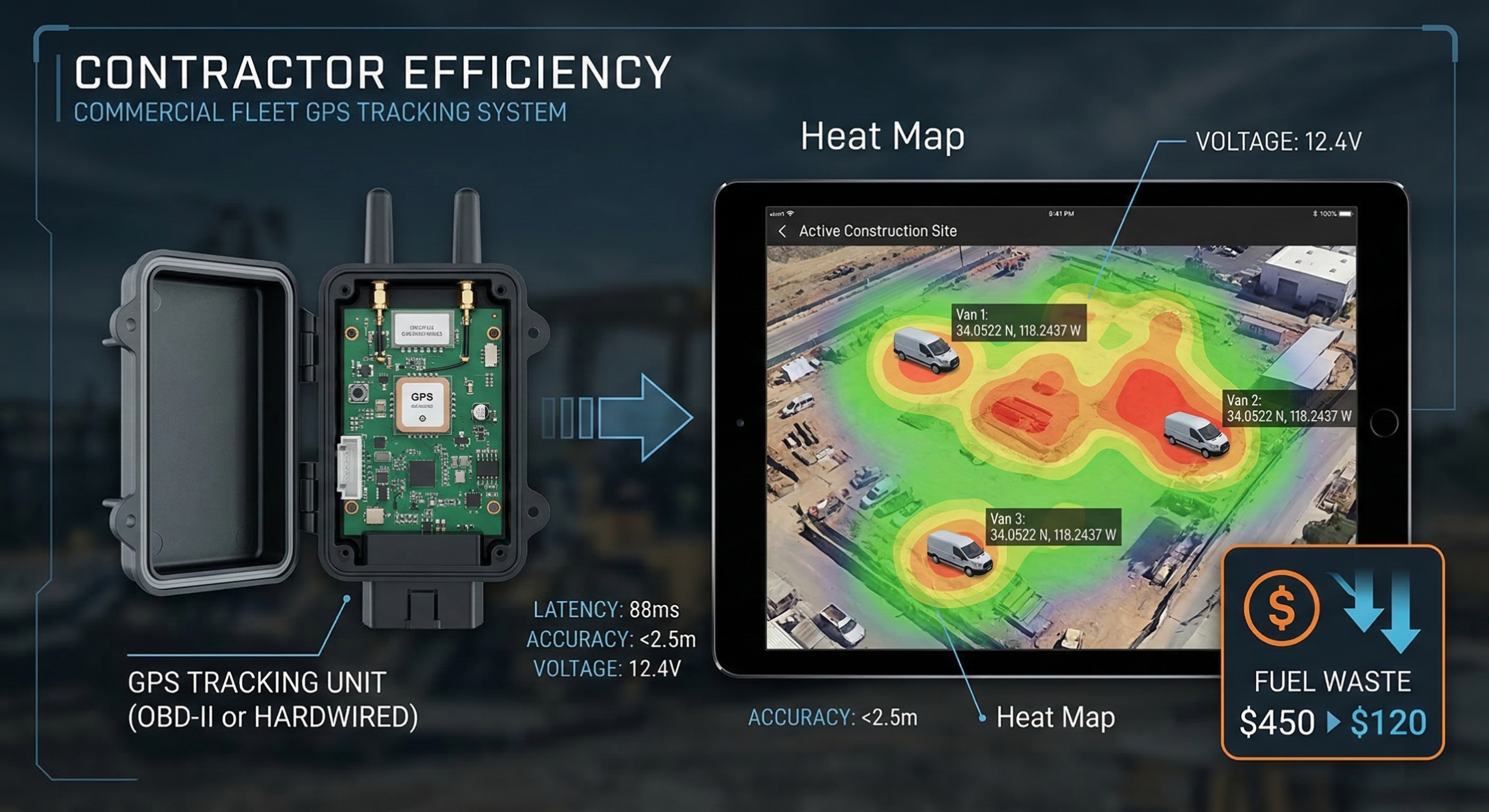
Reliable asset management requires a high-performance commercial fleet GPS tracking system to monitor vehicle locations and engine diagnostics. Modern hardware utilizes 4G LTE cellular connectivity and high-sensitivity GPS modules with accuracy to within 2.5 meters. Technical specifications for contractor-grade units include:
- IP67 waterproof ratings
- internal 3-axis accelerometers, and
- 12V to 24V power compatibility (even 9V to 36V, depending on model).
Implementation of these tracking systems typically results in a 15% reduction in fuel waste and a 20% improvement in routing efficiency for electrical, plumbing, and construction fleets.
Essential Hardware for a Commercial Fleet GPS Tracking System
Contractors face unique environmental challenges that require ruggedized tracking hardware. A standard commercial fleet GPS tracking system must provide real-time data, even in areas with poor cellular reception. These devices connect directly to the vehicle’s power supply but include backup batteries to ensure continuous reporting if a cable is cut. For heavy equipment, trackers must withstand extreme vibrations and temperatures ranging from -30C to +75C (-36F to +167F).
| Category | Typical Technical Specification | Contractor Benefit |
| Connectivity | 4G LTE / 5G Ready | Continuous coverage on remote job sites |
| Durability | IP67 Rated Enclosure | Protection against dust, mud, and rain |
| Power | 9V to 36V Input | Compatible with vans, trucks, and loaders |
| Data Lag | < 100 Milliseconds | Instant alerts for unauthorized movement |
We know that for a contractor (or fleet owner, for that matter), time is the most expensive resource. Our team at Tracking the World designs hardware that stands up to the rigors of the construction site. By installing a commercial fleet GPS tracking system, you gain total visibility over your mobile assets. We focus on providing the ground truth about where your trucks are and how they are being used. It is about protecting your bottom line from unnecessary wear and tear. We see these tools as an essential part of a modern service business.
Maximizing Job Site Efficiency and Tool Security
Equipment theft at construction sites costs the industry over 400 million dollars annually. A commercial fleet GPS tracking system acts as a digital silent alarm for high-value assets. If a trailer or skid steer moves outside of a designated geofence after 6:00 PM, then the system sends an immediate SMS alert. This enables rapid recovery before the equipment is stripped or moved across state lines.
- Geofencing allows you to set virtual boundaries around specific job sites
- Movement alerts notify managers of unauthorized weekend vehicle use
- Remote starter disable features can prevent theft in progress
- Battery backup ensures the device keeps pinging even if the main power is lost
- Ignition sensing identifies exactly when a machine starts and stops working
Efficiency is the difference between a profitable project and a loss. We provide the data that shows you exactly how much time is spent at each location. When you use a commercial fleet GPS tracking system, you can verify arrival and departure times for your crews. This eliminates disputes over labor hours and helps you bill clients with 100% accuracy. We believe in providing tools that make your business more transparent. It helps you manage more people with less stress.
Reducing Fuel Costs and Vehicle Maintenance
Fuel remains a massive overhead for any contractor with a fleet of service vans. Excessive idling is a silent profit killer that many owners overlook. If a vehicle idles for more than 10 minutes, then the system logs it as a coaching opportunity. Reducing idle time by just 20% can save thousands of dollars per vehicle each year. A commercial fleet GPS tracking system also monitors engine health through OBD II port integration.
| Metric | Savings Potential | Maintenance Impact |
| Idle Time | 10 to 15 Percent | Reduces engine carbon buildup |
| Speeding | 5 to 7 Percent | Decreases tire and brake wear |
| Route Optimization | 12 to 20 Percent | Lowers overall mileage per job |
| Maintenance Alerts | Preventive | Avoids costly roadside breakdowns |
Tracking the World focuses on the technical tradeoffs that matter to business owners. We do not just show you a map: we show you a path to higher margins. Using our commercial fleet GPS tracking system means you can schedule maintenance based on actual engine hours rather than just dates. This ensures your vans stay on the road instead of in the shop. We understand the pressure of meeting tight deadlines. Our technology is built to keep your fleet moving forward without interruptions.
Improving Driver Safety and Liability Protection
Accidents are a significant risk for contractors, especially when heavy trailers are involved. Monitoring driver behavior is a proactive way to lower insurance premiums and protect your brand. High G-force events like harsh braking or rapid cornering are captured by the internal sensors. If a driver consistently exhibits risky behavior, then you have the data needed to intervene before an accident occurs.
- Automated driver scorecards based on safety metrics
- Speeding reports that compare vehicle speed to posted limits
- Accident reconstruction data for insurance claims defense
- Seatbelt usage monitoring for safety compliance
- Live maps for dispatchers to find the closest technician for emergencies
Liability is a constant concern in the contracting world. We help you mitigate that risk with verifiable data. Having a record of exactly where your vehicles were at any given time can disprove false claims from third parties. Our hardware provides the evidence you need to back up your drivers. It creates a culture of accountability. When your team knows the vehicles are monitored, they drive with more care. This protects your vehicles and the public.
Scalable Solutions for Growing Fleets
Whether you have two trucks or two hundred, your tracking needs will change as you grow. We offer flexible hardware configurations that can be expanded at any time. If you add specialized equipment like generators or light towers, then we have battery-powered trackers designed for long-term deployment. These units can last up to five years on a single charge while providing daily location updates.
- Easy-to-use software interface for managing multiple vehicle types
- Customizable reporting for different departments
- API integration for connecting with your existing CRM software
- Multi-user access with different permission levels
- Historical data storage for long-term trend analysis
At Tracking the World, we pride ourselves on being a technical partner for our clients. We do not just sell boxes: we provide solutions that solve real-world problems. Our systems are designed to be intuitive so you can spend less time looking at software and more time managing your crew. If you are ready to take control of your fleet, we are here to help. Reach out to our experts to discuss the best hardware for your specific trade. Call us at 650-692-8100 or visit our contact page for a personalized quote.
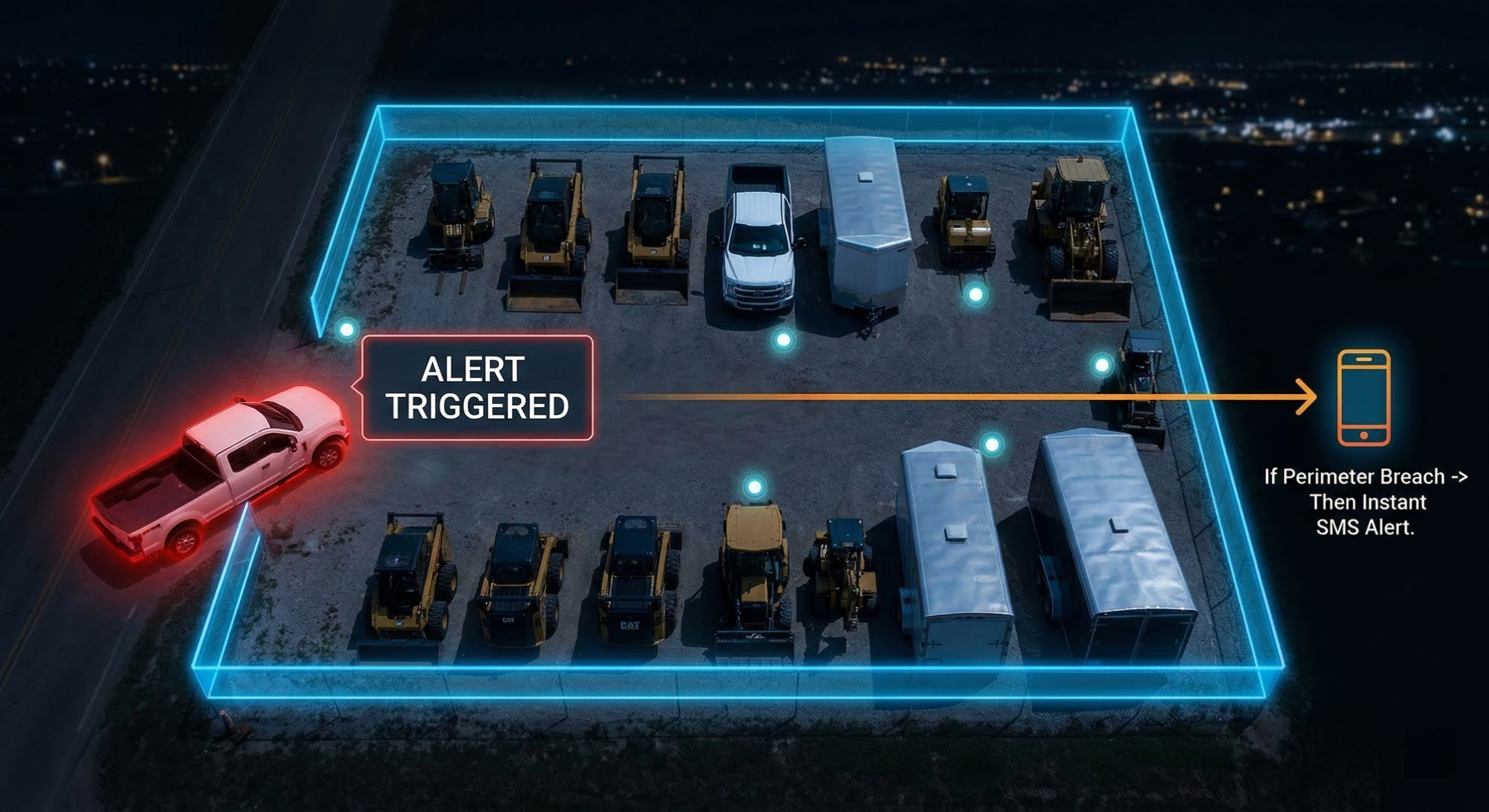


Photo by Chris Cordes on Unsplash https://unsplash.com/photos/man-in-gray-shirt-holding-black-tablet-computer-B296qZ-Yihw
In today’s fast-paced business world, companies must stay ahead. To do so, they must be efficient. They must also be smart. For small to mid-size fleets, this clearly means adopting modern technology. Above all else, GPS fleet tracking software stands out. It offers real-time insights. At the same time, it boosts productivity and drives profit. Most importantly, it levels the playing field. As a result, small and mid-size fleets can now compete with large operations. In turn, they gain powerful tools once only available to big players. Ultimately, GPS fleet tracking is no longer optional. These days, it is essential.
Why GPS Fleet Tracking Software Matters
First, GPS fleet tracking gives visibility. Specifically, it shows where every vehicle is. It also updates instantly. Because of this, managers no longer have to guess. Instead, they can know. In addition, they can track speed, routes, stops, and idle time. As a result, they consistently make better decisions, and this clarity drives efficiency.
Second, customers now expect faster service. In particular, they want accurate arrival times. They also want timely updates. With GPS tracking, companies can deliver on these expectations. Consequently, they can reduce delays. At the same time, they can increase satisfaction. Hence, customer loyalty grows over time.
Moreover, GPS fleet tracking cuts costs. In many cases, it reveals hidden inefficiencies. For example, it exposes unnecessary idling and highlights poor routing. It also shows unsafe driving. Once these issues are visible, they can be corrected quickly. Thus, fuel savings increase and maintenance costs drop.
Tailored for Small and Mid-Size Fleets
For years, large fleets have used fleet management tools. Now, however, software providers build versions specifically for smaller operations. These solutions are easy to use and affordable. They are also scalable. Best of all, they meet the unique needs of small and mid-size fleets.
For example, many small fleets do not have IT teams. GPS tracking systems now offer cloud-based platforms. These platforms require no servers or complex setup. Instead, managers access data through simple dashboards. Because of this, ease of use becomes vital. It saves time. It also reduces frustration.
In addition, pricing models now fit smaller budgets. Today, many vendors offer flexible subscription plans. As a result, companies pay only for what they use. There are no large upfront costs. Thus, small fleets gain access without financial strain.
Real-Time Tracking: The Heart of the System
Above all, real-time tracking remains the core benefit. Managers see live locations at any moment. They also watch movements as they happen. Because of this capability, response times improve. Routing becomes more efficient and enables rapid decisions.
For instance, if a vehicle encounters traffic, managers can quickly reroute others. Similarly, if there is a service delay, staff can update customers immediately. Therefore, communication improves across the board.
Moreover, real-time alerts keep managers informed at all times. Alerts notify about speeding and warn of unauthorized vehicle use. Additionally, alerts monitor vehicle health issues. Consequently, fleets remain safer and more compliant.
Boosting Productivity and Efficiency
GPS fleet tracking software does more than track locations. In fact, it transforms operations. First, it optimizes routes. Instead of guessing the best path, the software suggests the most efficient one. As a result, these suggestions save both time and fuel.
Second, it reduces idle time. Drivers become more aware of their behavior. This means they avoid wasting gas. Idle engines cost money. Tracking software makes this clear. Consequently, drivers improve their habits.
Third, scheduling becomes smarter. Managers can see which vehicles are free and they assign jobs faster. At the same time, they reduce downtime.
Importantly, small and mid-size fleets often wear many hats. Therefore, tools that streamline tasks truly matter. GPS tracking simplifies daily work. In doing so, it takes complexity off the table.
Enhancing Safety and Compliance
Safety is essential. Every fleet worries about accidents. Likewise, every company wants to protect its drivers. In this area, GPS tracking plays a strong role.
First, it monitors driver behavior. It shows speeding, harsh braking, and rapid acceleration. These signals clearly point to unsafe habits. Once visible, managers can coach drivers. As a result, performance improves. Over time, accidents decrease.
Second, GPS tracking helps with compliance. Many fleets must meet regulatory standards. They must keep logs. They must prove hours of service. Fortunately, software records data automatically. This reduces paperwork and reduces errors. Ultimately, it improves compliance.
Third, alerts help enforce rules. If a driver breaks a safety threshold, managers are notified immediately. They can then act quickly. As a result, this proactive approach lowers risk.
Reducing Costs and Driving Profit
Every small and mid-size fleet closely watches the bottom line. Expenses and profit matters. GPS fleet tracking drives savings in many areas.
Fuel is a major cost. By optimizing routes and reducing idle time, fuel use drops. While the savings may seem small at first, they add up fast. Over time, fuel cost reductions significantly improve profitability.
Maintenance is another major cost center. GPS tracking predicts issues early. Sensors can detect engine problems. Alerts signal needed maintenance. As a result, fleets avoid costly breakdowns. Scheduled maintenance also preserves vehicle life. In turn, this saves money.
Insurance costs also decrease. Many insurers reward safer fleets. Therefore, they lower premiums for fleets that use tracking software. In addition, GPS data supports claims. It shows facts clearly and disputes resolve faster.
Finally, improved customer service drives revenue. On-time deliveries improve repeat business. Satisfied customers refer others. As a result, growth follows.
Data-Driven Decisions
Data is power. GPS fleet tracking produces data. In fact, it produces a lot of it. But raw data alone is useless. Instead, the real value lies in insights. Thankfully, modern systems turn data into clear reports.
These reports show patterns. They also reveal trends. Managers learn which routes work best. They see which drivers excel. They identify where costs hide.
With this knowledge, decisions become smarter. Rather than reacting to problems, companies anticipate them. As a result, they plan better. They also forecast with confidence.
Furthermore, data supports strategic growth. Small fleets can scale confidently. Mid-size fleets can expand efficiently. All of this happens with informed decisions.
Easy Implementation and Support
Many fleet managers fear new technology. Often, they worry about disruptions. Yet, leading GPS tracking solutions remove these barriers.
First, installation is quick. Hardware arrives ready to use. Plug-and-play devices go in within minutes. There is no downtime. There are no headaches.
Second, training is simple. The software is intuitive. Most users learn quickly. In addition, vendors provide guides and videos. Support teams are also ready to help.
Third, updates happen automatically. Cloud-based systems receive improvements behind the scenes. As a result, users benefit without effort.
Together, these features make adoption painless. Small and mid-size fleets can implement fast. Consequently, they start gaining value right away.
Choosing the Right GPS Fleet Tracking Software
Not all solutions are the same. Careful selection matters. Small and mid-size fleets should evaluate several key factors.
First, consider cost. Choose a solution that fits the budget. Look at monthly fees and hidden costs. Above all, avoid surprises.
Second, review features. Look for real-time tracking, alerts, reporting, and mobile access. Make sure the system meets operational needs.
Third, think about scalability. The software should grow with the fleet. It should add users and vehicles with ease.
Fourth, evaluate support. Vendors that offer strong customer service make a real difference. Reliable support ensures smooth operation.
Lastly, reviews and reputation matter. Successful fleets share their experiences. Listen to them. Learn from them.
The Future of Fleet Management
GPS fleet tracking is not static. Instead, it continues evolving. Soon, integration with AI and machine learning will be common. Predictive analytics will suggest even better routes. Sensors will provide deeper vehicle health data. Driver coaching will also become more automated.
For small and mid-size fleets, this future is especially exciting. These advancements will deliver greater efficiency. They will lower costs. They will enhance safety. Most importantly, they will support growth.
The message is clear. GPS fleet tracking software is no longer a luxury. Rather, it is a strategic asset. It turns data into action, empowers managers, and strengthens fleets.
Final Thoughts
In conclusion, GPS fleet tracking software offers transformative value to small and mid-size fleets. It delivers visibility, efficiency, safety, and cost savings. At the same time, it simplifies operations. It enhances customer service. It also supports smart decision-making. Moreover, it empowers fleets to grow and compete.
For any fleet aiming to improve performance, investing in GPS tracking is a smart choice. It drives measurable results. It delivers real impact. Above all, it positions fleets for success in a competitive market.
Ultimately, adopting GPS fleet tracking software is not just a technological upgrade. It is a business advantage.


Mohamed_hassan / Pixabay
GPS tracking solutions now do much more than show locations. They act as core operational systems for modern businesses. These platforms connect vehicles, equipment, assets, and personnel to centralized software. Most solutions use telematics and fleet-management tools. They give real-time visibility, reduce inefficiencies, and support better decisions. Industries such as transportation, logistics, construction, field services, and the public sector rely on GPS tracking to operate at scale.
What GPS Tracking Means for Businesses
A GPS tracking solution combines hardware, connectivity, and cloud-based software. It continuously collects and analyzes location and sensor data from mobile assets. Modern systems do not simply display maps. They convert raw data into insights that guide dispatching, maintenance, safety, and compliance. When used strategically, GPS tracking helps control costs, improve service, and reduce risk.
Core Components of GPS Tracking Solutions
Modern GPS tracking platforms include three integrated layers. The first layer is hardware and sensors. These devices are installed in vehicles or attached to assets. Examples include OBD‑II devices, hardwired trackers, battery-powered asset trackers, and IoT sensors. They collect data such as location, speed, ignition status, mileage, fuel use, engine health, and environmental conditions.
The second layer is connectivity. Most systems use cellular networks such as 4G/LTE, LTE‑M or NB‑IoT. Satellite connectivity supports remote operations. Reliable data transfer ensures accurate and timely information.
The third layer is cloud-based software and analytics. This layer includes dashboards, live maps, alerts, reports, route optimization, and geofencing. APIs allow integration with ERP, CRM, dispatch, and maintenance systems. Together, these layers turn location data into actionable intelligence.
How GPS Tracking Improves Operations
GPS tracking improves operations by increasing visibility. Managers can see asset locations and availability in real time. This visibility supports faster dispatching, fewer unnecessary miles, and more accurate arrival times. Over time, organizations improve asset use and service consistency.
GPS tracking also helps reduce fuel and operating costs. By analyzing telematics data, organizations can identify inefficient driving behaviors such as excessive idling, speeding, and poor routing. As a result, managers can coach drivers and adjust routes. Even small improvements can generate significant savings across large fleets.
In addition, safety and liability management improve. For example, driver behavior data supports coaching and incident reviews. This approach helps reduce accidents, lower insurance costs, and strengthen accountability. At the same time, detailed records protect organizations against false claims.
Another key benefit is predictive maintenance. By combining GPS data with engine diagnostics and mileage, organizations can plan maintenance more effectively. Consequently, they reduce breakdowns, limit downtime, and extend asset life. Overall, this leads to higher availability and lower ownership costs.
Asset security and utilization also improve. Through geofencing and real-time alerts, organizations can prevent theft and recover assets faster. Meanwhile, utilization reports reveal underused assets. This insight allows organizations to reallocate resources, reduce fleet size, or delay new purchases.
Finally, GPS tracking simplifies compliance. Automated logs, inspections, and reports reduce paperwork and minimize errors. As a result, organizations remain audit-ready without disrupting daily operations.
Features That Deliver Business Value
High-value GPS tracking features align with operational goals. Real-time tracking and trip history support dispatch and analysis. Geofencing and alerts enable proactive management. Route optimization and ETA tools reduce mileage and improve customer experience.
Driver scoring and coaching tools support safety and fuel efficiency. Maintenance tools reduce unplanned downtime. Open APIs prevent data silos by enabling system integration. Scalability, flexible hardware and strong data security support long-term use.
Measuring Return on Investment
Organizations should define clear metrics before deployment. Baseline measurements help track improvement. Common KPIs include fuel cost per mile, response time, asset utilization, maintenance cost, downtime, accident rates, and administrative hours.
When tracked consistently, these metrics show how GPS tracking offsets its cost. Many organizations see positive returns within months. Savings often come from fuel reduction, fewer accidents, and less administrative effort.
Implementation Best Practices
Successful deployment requires clear goals. Objectives should link to measurable outcomes. Pilot programs allow teams to refine workflows before scaling.
System integration is essential. GPS data should connect to dispatch, maintenance and customer systems. Employee engagement also matters. Positioning GPS tracking as a safety and performance tool improves adoption. Over time, automation should replace manual processes.
Industries That Benefit Most
GPS tracking benefits many organizations with mobile assets. It delivers strong value in transportation and logistics, construction, equipment rental, field services, utilities, public fleets and food distribution. Industry-specific features increase control and speed adoption.
GPS Tracking as a Strategic Asset
GPS tracking is no longer just a location tool. When combined with analytics, integrations and change management, it becomes a strategic asset. Organizations gain lower costs, improved safety, better asset use, and higher service quality. For businesses seeking efficiency and accountability, GPS tracking is a proven and scalable investment.
Future Trends in GPS Tracking Technology
GPS tracking solutions continue to evolve as technology advances. Artificial intelligence and machine learning are increasingly embedded in telematics platforms. These tools analyze large volumes of historical and real-time data to identify patterns that humans may miss. As a result, organizations can receive smarter recommendations for routing, maintenance, and risk reduction.
Automation is another growing trend. Modern systems can trigger workflows automatically based on predefined rules. For example, maintenance tickets can open when mileage thresholds are reached. Alerts can notify managers when assets enter or leave job sites. Automated actions reduce manual effort and improve response times.
The expansion of Internet of Things (IoT) sensors is also shaping the future of GPS tracking. Beyond basic location data, these sensors now capture information such as temperature, humidity, vibration, and cargo status. As a result, these capabilities are especially valuable for industries like food distribution, pharmaceuticals, and construction. Overall, businesses gain deeper visibility into asset conditions, not just their movement.
Electric vehicle fleet management is becoming a critical focus area. As organizations adopt electric vehicles, GPS tracking platforms are adapting to monitor battery health, charging behavior, and energy consumption. These insights help fleets optimize charging schedules and avoid operational disruptions.
In addition, data security and privacy are also receiving increased attention. Enterprise-grade GPS solutions now include stronger encryption, role-based access controls, and compliance with global data protection standards. These measures ensure that sensitive operational data remains protected.
Looking ahead, GPS tracking will play an even larger role in strategic planning. Over time, long-term trend analysis will support capacity planning, network design, and sustainability initiatives. As a result, organizations that invest in modern GPS tracking solutions today will be better positioned to adapt, scale, and compete in increasingly complex operational environments.

The ability to track assets, vehicles, and your workforce in real-time is so much more than just a convenience. In truth, it has become almost a necessity because we live in such a fast-paced and data-driven world. Tracking isn’t so you can stalk employees or their moves; it’s so you can operate efficiently, manage timelines and planning, and even keep track of your company belongings. Whether you operate a delivery service, construction company, or long-haul fleet, a GPS tracking company can help you optimize, cut costs, and improve your customer satisfaction.
But it’s not just using the GPS systems that helps you. It’s learning how to use them well and use them correctly for your needs. Having a reliable company with quality software and products is your first step to doing just that. It’s going to make all the difference. In this guide, we will explore why your business needs GPS tracking and how it can play a role in many ways to your overall success.
What Does a GPS Tracking Company Do?
A tracking company with GPS solutions will provide you with the necessary hardware, software, and support to ensure you can actively monitor personnel, equipment, and vehicles for your business needs. The tracking can be done in real time, allowing you to see things like speed, routes, idle time, location, engine data, and so much more. All of that detail pulls together in a centralized platform or even a mobile app, making it easy to access.
This is far beyond simply tracking some dots on a map when you have assets out in the field. It’s offering solutions to plan, manage, track, etc. A good tracking solution will provide many (if not all) of these things:
- Maintenance scheduling and tracking
- Real-time alerts
- Customizable dashboards for unique needs
- Historical analytics and reporting
- Route optimization and planning
- Geofencing
- Technical support
You should have just about everything you need right at your fingertips to track and then take that raw data to determine actionable insights.
Top Benefits of Partnering with a Reliable GPS Tracking Company
Photo by Pixabay on Pexels
There are some substantial benefits that every business owner should know about using a GPS company for these solutions. Let’s check out the top benefits.
Increase Operational Efficiency
Knowledge offers you the power to be more efficient and improve processes for your operations. When you understand challenges or things that might be creating inefficiencies, you can properly address them. This allows you to streamline routes, reduce idle time, and even monitor driver behavior. A company that allows customization of your performance metrics gives you what you need to identify, adjust, and improve. It’s visibility that could lead to cost savings, faster delivery, and higher productivity.
Enhance Security
With dependable tracking systems, you can always know where your assets are and whether something goes wrong. For example, you can establish alerts that will tell you if a vehicle deviates from the planned route. It will also alert you if they enter a restricted area or leave a designated zone. This can make you aware of theft and give you better resources for recovery, but it also simply keeps you aware so you can know if something needs to change or something is going on that shouldn’t be.
Transparency and Service
If you have customers that you interact with, tracking services can help you better serve them. It also gives you the data to be more transparent and set more accurate ETAs. This allows faster responses and live delivery updates when used properly. You may even be able to integrate with your CRM or other similar software.
Reduce Costs
GPS tracking can go a long way to helping you reduce costs and expenses. You can improve fuel efficiency, improve insurance savings, and better manage the maintenance of any vehicles in your fleet.
Improve Safety and Accountability
Your employees should be held accountable when they are in company vehicles of any kind. As the business owner or manager, you are entitled to visibility when it comes to driver behavior so you can be advised of things like hard braking, speeding, and route deviations. This holds your drivers accountable but also might help you understand when something needs changed or adjusted.
Scalable
These solutions are modern and embrace a future of technology. In most cases, the package you start with will be scalable so it can grow or evolve as your business does. A reputable tracking company is going to offer scalable solutions for this expansion purpose. You should never lose data or functionality to scale as needed. These systems are designed to evolve with your business, rather than work against its growth or evolving.
Choosing the Right GPS Tracking Company
There are some things you might want to consider when choosing a company like this. They are all different and unique, but these are some things that may help you:
- A proven track record with businesses in your industry
- Real-time tracking capabilities
- Detailed analytics and reports
- Transparent pricing with flexible options
- Easy-to-use software interface
- Ongoing support and assistance
- Positive client reviews and testimonials
Choose a company that is proactive and continues to improve in its own ways.
GPS Company Tracking with Tracking the World
At Tracking the World, we are proud to offer a variety of solutions to meet many unique needs. Our GPS tracking solutions provide you with the essentials of tracking while extending well beyond the basics to give you all the data and analytics you need to get things done. Let our systems help you get support, reduce costs, increase security, and have deeper control over your operations.
Ready to give it a try? Check out our options or contact us today to learn more.


